Omi ProductDrop Berlin Launch Anchors AI Visuals
Explore in-depth coverage of the Omi ProductDrop Berlin launch and its significant impact on AI-driven product visuals and branding trends.
 Shipped by Jules Pereira
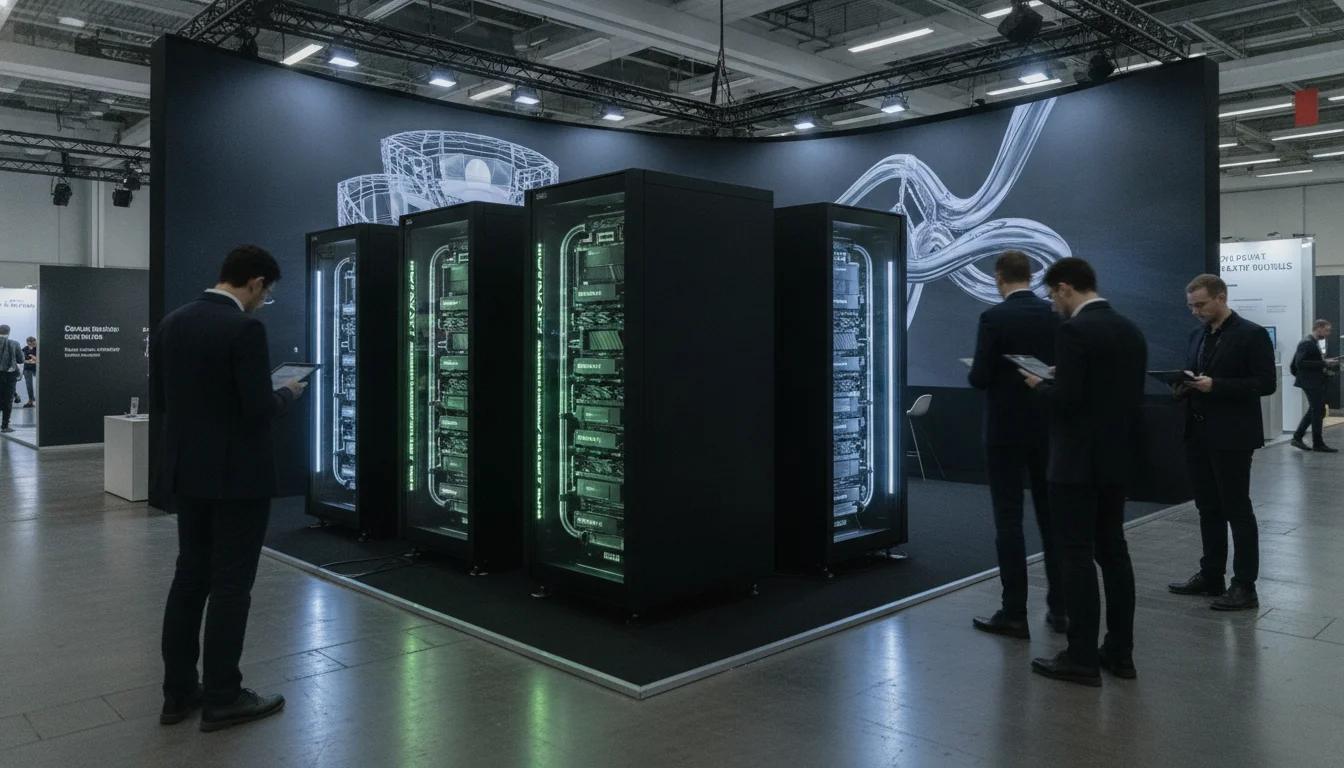
On October 21, 2026, Omi announced ProductDrop at NVIDIA’s GTC Berlin, unveiling a new workflow that anchors AI-generated product imagery to an approved 3D Digital Twin. The Berlin launch is designed to address a persistent challenge for consumer brands: how to scale visuals for catalogs, campaigns, and e-commerce without sacrificing product accuracy. In a market where brands must produce thousands of variations—across packaging, regional variants, and seasonal campaigns—the ability to generate visuals at scale while preserving brand integrity is not merely a niche improvement; it’s a potential shift in how creative production operates. This event, positioned at the intersection of generative AI and product truth, signals a clear intent from Omi to elevate the reliability of AI-powered imagery in real-world retail workflows. The official release frames ProductDrop as a production-grade bridge between fast AI exploration and production-ready visuals anchored to real product data. (omi.so)
Coverage from NVIDIA’s ecosystem emphasizes a practical dimension of the Berlin launch: ProductDrop anchors every generated image to the same approved digital twin, preserving geometry, materials, artwork, and labels across hundreds or thousands of outputs. In the NVIDIA blog’s notes on the Berlin moment, Omi’s approach is presented as a disciplined alternative to “recreating” products in every image, replacing that ad-hoc generation with a stable source of product truth that supports scale. The result, according to NVIDIA’s post, is a workflow where creative exploration can run wild without drifting from the product’s reality. This context underpins a broader industry shift toward production-grade AI that remains faithful to tangible product data. (blogs.nvidia.com)
One liftable fact central to the story is that Omi announced ProductDrop on October 21, 2026 in Berlin, anchoring every generated image to an approved 3D Digital Twin and claiming TRELLIS inference runs 10x faster. This compact sentence captures the date, the subject, the core technical claim, and the governance mechanism—an essential datapoint readers can cite in subsequent coverage. The assertion about 10x faster inference comes from NVIDIA’s Berlin coverage, while the digital twin anchoring comes from Omi’s own press materials. Together, they ground the launch in verifiable, dual-source context. (omi.so)
Section 1: What Happened
Announcement Details
In its Berlin-based press materials, Omi rolled out ProductDrop as a production-grade method to generate AI imagery that remains true to the product’s identity. The release describes ProductDrop as a system that converts any image or GenAI output into a production-ready, pixel-accurate visual while keeping product truth intact. The core claim is that ProductDrop anchors visuals to a versioned 3D Digital Twin, ensuring consistency across formats, environments, and variations without introducing product errors. This is framed not as a cosmetic enhancement but as a new standard for reliability in AI-generated retail visuals. The press release highlights that ProductDrop is built on a foundation of NVIDIA technologies, including OptiX and CUDA, and leverages both open-source and proprietary components to deliver a scalable, production-ready pipeline. The release also notes a real-world demonstration pathway, with a call to action to visit GTC Berlin and a specific booth for live demos. For readers seeking context, the release explicitly references L’Oréal’s CreAItech program as an early adopter showing how brands can combine digital twins with AI-generated brand environments. A key takeaway is that ProductDrop promises unlimited visual output while maintaining brand integrity, a combination designed to accelerate launches and reduce rework in high-stakes consumer marketing. (omi.so)
Timeline and Key Facts
The Berlin launch is tied to NVIDIA’s GTC Berlin, with Omi positioning ProductDrop as a mechanism to accelerate the production of visuals for large product catalogs. The press materials specify that the launch occurred on October 21, 2026, and that ProductDrop relies on a versioned Digital Twin as the single source of truth. The technical narrative weaves together NVIDIA’s acceleration stack—CUDA, OptiX, RTX PRO GPUs—with TRELLIS for 3D asset generation and additional open-source components for depth estimation and 3D asset handling. The Berlin venue is not just a backdrop; it is framed as a live demonstration opportunity, with ProductDrop visuals to be showcased at the GTC Berlin booth. The release also foregrounds performance improvements in the inference pipeline, noting that TRELLIS-based tasks run on NVIDIA hardware and that latency reductions are part of the productivity gains. In sum, the timeline presents ProductDrop as a convergent point for brand governance, creative exploration, and production efficiency. (omi.so)
Partners and Adoption
Omi’s materials position notable brand partners as early beneficiaries of ProductDrop’s approach. L’Oréal is specifically cited as using Omi’s Digital Twins in its CreAItech program to combine accurate 3D product representations with AI-generated brand environments. The broader client base list includes L’Oréal, Nestlé, Estée Lauder Companies, and Shiseido, underscoring a tier-one consumer goods footprint intended to validate ProductDrop’s market relevance. The inclusion of these names is not merely promotional; it anchors the Berlin launch within real-world brand governance and regulatory considerations—areas where accuracy and consistency matter more than ever for product imagery used across e-commerce, campaigns, and retail displays. The press materials also emphasize that ProductDrop’s architecture is designed to minimize misrepresentations or “product hallucinations” that can occur with generic AI image generation, a risk that brands increasingly want to mitigate as advertising platforms demand tighter brand compliance. (omi.so)
Why It Matters
Product Accuracy at Scale
The emergence of ProductDrop at the Berlin event marks a notable inflection point in how brands think about visual content at scale. The core problem ProductDrop seeks to solve is the tension between speed and fidelity in product visuals generated via AI. The product’s architecture—anchoring all AI-generated visuals to a shared Digital Twin—addresses a long-standing pain point: as soon as creative teams push products into new environments or variations, the risk of subtle misrepresentations increases. The Berlin release frames this as a practical solution for brands managing hundreds or thousands of SKUs across channels and geographies, where even minor packaging or labeling differences can become costly missteps if not centrally controlled. NVIDIA’s coverage reinforces this perspective by highlighting that a brand’s trust in imagery depends on maintaining exact product truth, not just plausible aesthetics. The combined message is clear: in retail AI workflows, fidelity is a feature, not a bug. (omi.so)
Brand Safety and Compliance
The deterrent against product image errors is not a trivial advantage; it’s a potential liability mitigator. The Berlin material quotes industry executives who frame product accuracy as foundational to consumer trust. By linking visuals directly to an approved Digital Twin, ProductDrop reduces the likelihood of mislabeling, incorrect proportions, or packaging discrepancies creeping into marketing assets. The L’Oréal example demonstrates a practical pathway from digital twin representations to brand-generated content that remains on-brand and compliant with regulatory and legal standards. In a broader sense, the ProductDrop approach aligns with industry expectations that AI-generated product visuals will be used across multiple channels, from social media to storefronts, and must remain faithful to the product across variations and geographies. NVIDIA’s own coverage adds a layer of credibility by connecting ProductDrop to a broader ecosystem of open models and production-grade AI that emphasizes reliability and governance in image generation. (omi.so)
Market Implications for GenAI Visuals
Beyond the brand-level benefits, the Berlin launch situates ProductDrop within a competitive but rapidly expanding space where AI-generated visuals are increasingly treated as a production asset rather than a one-off experiment. The claim of 10x faster TRELLIS inference, coupled with latency reductions, implies a significant uplift in throughput for creative teams. If brands can generate more on-brand imagery in shorter cycles, the cost per asset could drop—an outcome hinted at in the press materials and reinforced by NVIDIA’s commentary on faster, more scalable AI workflows. The joint reference to production-ready visuals and a versioned Digital Twin suggests a shift from ad-hoc AI art to repeatable, auditable production pipelines. As brands seek to localize campaigns, customize per-market content, and accelerate product launches, ProductDrop provides a framework that could reshape the calculus of creative operations, vendor selection, and internal ROI models. The Berlin moment is less about one product’s novelty and more about signaling a broader industry transition toward AI-assisted, governance-aware production ecosystems. (omi.so)
What It Means for the Competitive Landscape
Omi is not operating in a vacuum. NVIDIA’s Berlin coverage, which includes references to multiple retail and open-model deployments, positions ProductDrop within a larger movement toward open AI ecosystems that maintain brand and product truth. While other players in the content generation space may emphasize speed, many brands worry about accuracy, especially when large catalogs are involved. ProductDrop’s anchor-to-Digital-Twin approach differentiates it by offering a verifiable source of truth for visuals that multiple downstream processes rely on—brand teams, legal, marketing, and e-commerce platforms. The collaboration with industry giants like L’Oréal and the emphasis on production-ready, scalable visuals place ProductDrop in a category that could become the de facto standard for brand-safe AI imagery in retail. NVIDIA’s involvement, via the Berlin event coverage and technical integration, helps position ProductDrop not simply as a product feature but as a building block in a broader, standards-driven AI retail stack. (blogs.nvidia.com)
What’s Next
Short-Term Steps and Demos
In the near term, the Berlin announcement invites brands and partners to experience ProductDrop through live demos at the GTC Berlin booth (#7059). The release underscores that prospective customers can see the end-to-end workflow, from AI-generated environments to production-ready visuals anchored by Digital Twins. For readers following the coverage, this creates a clear avenue for firsthand assessment of performance gains, brand governance, and integration with existing creative pipelines. Omi’s materials also point to ongoing collaborations with major brands and a pipeline of case studies that will emerge as ProductDrop scales within the enterprise. The emphasis on a live demonstration regime at Berlin indicates that Omi intends to convert interest into tangible pilots with early adopters who want to test the product in real-market conditions. (omi.so)
Near-Term Milestones to Watch
Given the Berlin launch, several near-term milestones are likely to shape how ProductDrop is perceived:
- Case studies from L’Oréal CreAItech and other early adopters illustrating measurable improvements in production speed and asset consistency.
- Technical performance benchmarks for TRELLIS-based 3D asset generation on RTX PRO GPUs, with concrete latency figures across typical retail assets.
- Deeper integration details with Verda’s AI cloud and MoGe/Microsoft TRELLIS toolchains, including any updates to the inference endpoints and compatibility with common asset formats.
NVIDIA’s ongoing Berlin coverage suggests that public demonstrations and partner showcases will be a major channel for sharing empirical results. For readers and investors, these demonstrations will offer a critical look at the real-world ROI of ProductDrop and its role in accelerating product launches. (blogs.nvidia.com)
Long-Term Signals and Strategic Trajectories
The longer-term implications of the Omi ProductDrop Berlin launch extend beyond a single product feature. The Berlin moment aligns with a broader trend toward production-grade, governance-aware GenAI workflows in retail, fashion, cosmetics, and consumer goods. Omi’s positioning as “the Product Source of Truth” for consumer brands—emphasizing a reusable, accurate foundation for visuals across campaigns, e-commerce, and retail—signals a strategy that could influence how brands evaluate creative-agency partnerships, content supply chains, and in-house content studios. If the product gains traction, we could see:
- Wider adoption across luxury and mass-market brands seeking scale without compromising brand integrity.
- Increased demand for AI infrastructure tailored to brand governance, including asset versioning, lineage tracking, and compliance audits for visuals.
- A more defined ecosystem around Digital Twins in marketing, with collaborations among camera-ready product data, 3D asset pipelines, and AI-driven image composition.
Omi’s existing client roster and the NVIDIA ecosystem coverage provide a credible signal that this is not a one-off demonstration but a strategic move toward a scalable, auditable model for AI-generated product visuals at global brands. As always, the true test will be how quickly the market translates these capabilities into repeatable, cost-effective production across multiple regions and product categories. (omi.so)
What’s Next (Continued)
Beyond Berlin, observers will want to track how ProductDrop integrates with broader brand-operations workflows, including digital asset management, legal approval processes, and multi-market localization. The combination of Digital Twins, open AI models, and enterprise-grade GPUs suggests a multi-stakeholder governance model that could influence procurement, partner selection, and the sequencing of creative investments. If Omi can demonstrate sustained, auditable improvements in asset quality and production velocity across a diversified brand portfolio, ProductDrop could become a central element of the modern marketing tech stack. The Berlin launch thus functions as both a milestone and a proving ground for a new class of production-ready AI that respects product truth as a non-negotiable constraint. (omi.so)
Closing
As brands navigate an era of rapid content cycles and shifting consumer expectations, ProductDrop’s Berlin launch provides a reference point for how AI and 3D product truth can work together at scale. Omi’s approach—anchoring visuals to a verifiable Digital Twin and leveraging production-grade GPU-accelerated workflows—offers a clear blueprint for reducing rework, accelerating launches, and maintaining brand integrity across channels and markets. For readers of Building It, the event is a tangible illustration of how technical decisions—such as the choice of a Digital Twin as the single source of truth—translate into business outcomes: faster time-to-market, improved consistency, and a stronger foundation for global brand storytelling in the AI era. As more brands observe, test, and adopt this approach, the Berlin moment could become a reference point in the evolving dialogue around responsible, scalable AI in consumer marketing. Readers who want ongoing updates should monitor Omi’s ProductDrop page and NVIDIA’s Berlin coverage, which together will likely reveal early adopter experiences, performance benchmarks, and new partnerships as the ProductDrop Berlin launch continues to unfold. (omi.so)