NEURA Unveils Neuron AI at GTC Berlin 2026
NEURA Robotics launched Neuron AI, a multimodal foundation model for Physical AI, at GTC Berlin, showcasing its capabilities in a live demonstration…
 Shipped by Mira Kowalski
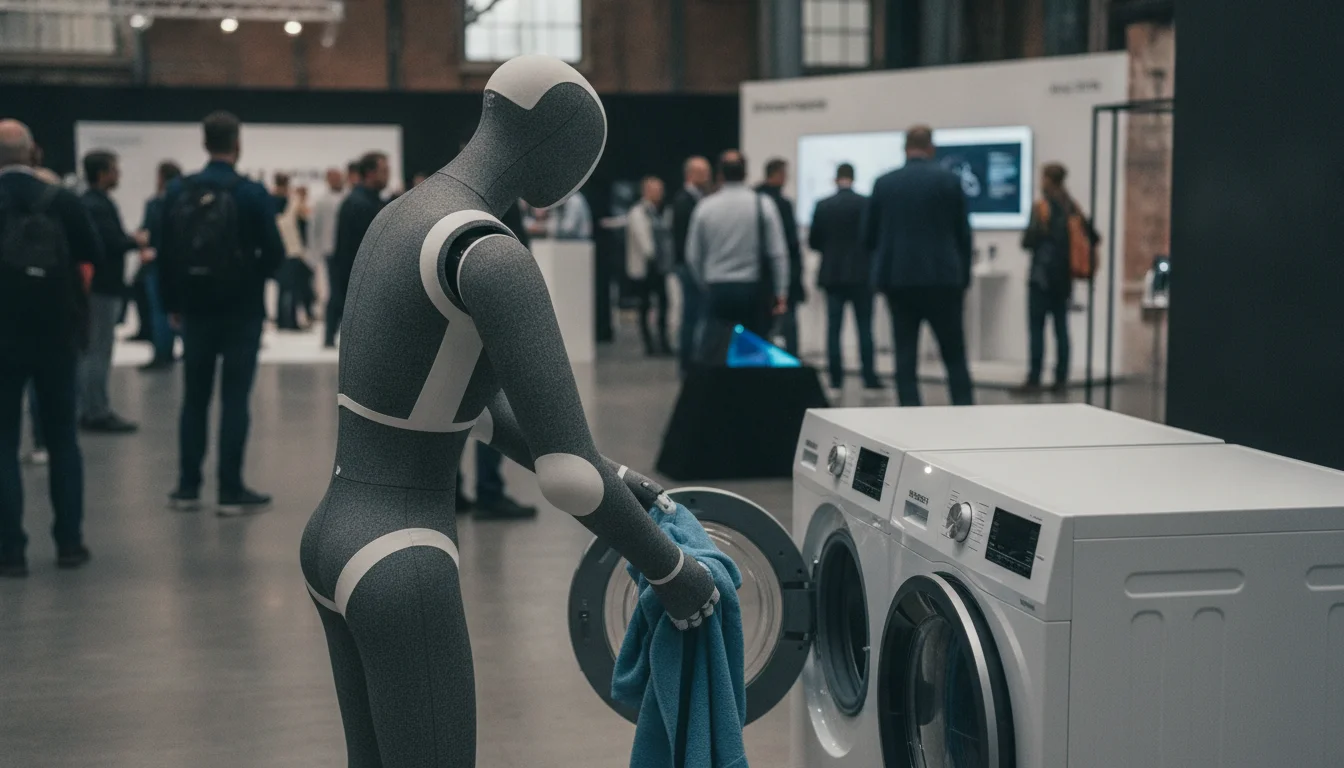
Neuron AI Berlin launch shown at GTC Berlin 2026
The news arrived in mid-October 2026: NEURA Robotics announced Neuron AI, its multimodal foundation model for Physical AI, and set the stage for a high-profile public demonstration at NVIDIA’s GTC Berlin event. The company described Neuron AI as a Unifying Perception-Language-Action model that fuses 3D vision, touch, audio, robot state and language with memory. The formal introduction occurred on October 14, 2026, from NEURA’s headquarters in Metzingen, Germany, and the team signaled that a live demonstration would accompany the NVIDIA GTC Berlin conference, scheduled for October 20–22, 2026, at Station-Berlin. The launch represents a deliberate push into the “physical AI” space—an area many researchers and investors see as the next frontier for robotics and automation. (neura-robotics.com)
“Neuron AI is designed to act on information beyond what cameras alone can capture, and to retain relevant context when objects disappear from view,” NEURA’s release states, describing the PLA architecture that underpins the model. The company emphasizes that Neuron AI is trained across three data pillars—real-world robot data, simulation-amplified data, and human demonstration data—so that the model can generalize across tasks and environments rather than relying on a single static scenario. This emphasis on multisensory perception and memory is intended to push robots from reactive to proactive, from task-specific routines to adaptable, context-aware action. The event at GTC Berlin is not merely a teaser; NEURA frames it as a tangible demonstration of the model’s capabilities on a publicly visible platform. (neura-robotics.com)
The official materials also establish a clear meta-narrative: time-to-skill, a central metric for industrial robotics, measures how quickly customers can train and deploy new skills across fleets. NEURA’s architecture and ecosystem—Neura Gyms, Neuraverse, and the Time-to-Skill framework—are positioned as the connective tissue that makes Neuron AI useful not just for single-task demos but for scaling cognitive robots across multiple tasks and environments. The company asserts that Neuron AI is developed in Germany and meant to serve a global customer base, with planned deployments that extend beyond a single embodiment. This context matters for readers who follow European robotics as a competitive, standards-driven space. (neura-robotics.com)
Section 1: What Happened
Announcement and Architecture
On October 14, 2026, NEURA Robotics publicly introduced Neuron AI, calling it a multimodal foundation model for Physical AI. The announcement framed Neuron AI as a unification engine that combines 3D vision, tactile sensing, audio, robot state data, language, and memory into a single Perception-Language-Action (PLA) model. The key argument is that robots can interpret and act on multisensory information in a way that mirrors, and extends beyond, what cameras alone can reveal. The release explicitly calls out memory as a crucial differentiator, enabling a robot to maintain context across time and to handle tasks where objects move in and out of view. The German-founded company emphasizes that Neuron AI is trained across data pillars spanning real-world robot experiences, simulated variations, and human demonstrations. The result is a shared model that can be deployed across multiple embodiments with common capabilities. For readers following the product, the official product page provides deeper technical context and ongoing updates at https://neura-robotics.com/neuron-ai. (neura-robotics.com)
Demonstration Details
A central facet of the NEURA launch narrative is the live demonstration scheduled at NVIDIA GTC Berlin 2026, set for October 20–22. NEURA states that its humanoid platform 4NE1, nicknamed “For Anyone,” will perform an eleven-minute laundry-handling sequence with the current version of Neuron AI, completing a full cycle from sorting to loading, washing, and drying with minimal, if any, human intervention. The demo is described as a test of planning, multisensory perception, memory, and the coordination of physical actions across a real-world, household-like task. The demonstration is to take place at Station-Berlin, Hall 3, Booth #3031, and is positioned as a tangible example of Neuron AI’s capabilities in a real public setting. This timeline—announcement on October 14, followed by the October 20–22 public demo—highlights NEURA’s intent to show not just a concept but a concrete demonstration to a broad audience of industry professionals, potential customers, and press. (neura-robotics.com)
“An intelligent robot needs a brain that brings its senses together and remembers what happened,” said David Reger, Founder and CEO of NEURA Robotics. “With Neuron AI, we are building the brain of the physical world: Physical AI that turns human expertise and physical experience into capabilities robots can learn and apply. Developed in Germany, built for the world.” (neura-robotics.com)
Company Context and Partnerships
The NEURA release emphasizes the German roots of the technology stack, describing Neuron AI as “AI built in Germany” and developed in-house in Metzingen. This geographic emphasis matters for European robotics ecosystems where the convergence of AI, hardware, and industrial data standards is a strategic asset. The launch materials also point to data partnerships and collaboration with established industrial players, underscoring a broader strategy to embed Neuron AI within manufacturing and logistics workflows. The combination of in-house development and external partnerships aligns with a broader industry pattern: European hardware-software AI platforms seeking to accelerate real-world adoption through both capability development and ecosystem building. (neura-robotics.com)
Data Pillars: Real-World, Simulation, and Human Demonstrations
Neuron AI’s training regimen centers on three data pillars: real-world robot data gathered from NEURA Gyms, simulation-amplified data from NEURA’s simulation stack, and human demonstration data captured via sensor-equipped suits. The emphasis on diverse data sources is designed to address the gap between sim-to-real transfer challenges and to improve generalization across tasks and environments. The emphasis on data-led training aligns Neuron AI with contemporary approaches to foundation models in robotics, where broad exposure and varied contexts are used to build robust capabilities. The three pillars are described as the core engine behind a shared foundation across five robot embodiments, each with distinct grippers and hands. (neura-robotics.com)
Section 2: Why It Matters
Multimodal Perception and Memory: A Step Toward Physical AI Autonomy
Neuron AI’s PLA framework integrates vision, touch, and sound with memory, enabling robots to operate in conditions where sight alone is insufficient. The emphasis on multisensory perception—going beyond camera data to include contact and acoustic cues—addresses one of the core limitations of traditional robotics perception. The memory component is described as essential to maintaining continuity in tasks where objects disappear from view or where task context must be preserved across steps. For practitioners evaluating the trajectory of Physical AI, Neuron AI’s architecture represents a deliberate attempt to move beyond purely visual AI toward a more holistic, sensor-rich cognitive system. The official materials outline these capabilities in detail, stressing the practical benefits for tasks that require robust sensory integration and context retention. (neura-robotics.com)
Time-to-Skill and Fleet Deployment: A New Operational Metric
A recurring theme in NEURA’s communications is Time-to-Skill, a metric designed to quantify how quickly a robot can learn a new task and execute it reliably across a fleet. The Neura Gyms and Neuraverse platform are positioned as the infrastructure that reduces Time-to-Skill by enabling rapid skill transfer and deployment across multiple embodiments. In practice, this means that enterprises could roll out new tasks to entire robot fleets with fewer re-training cycles and less bespoke integration work. Observers will watch to see how well consumers can apply NEURA’s platform in production settings—including machine tending, assembly, and logistics workflows—where variability and complexity can challenge any AI-enabled system. The emphasis on fleet deployment, shared skills, and private data is an important signal about NEURA’s go-to-market thesis. (neura-robotics.com)
Industrial and European Context: Germany as an AI-Hardware Hub
The NEURA launch comes at a time when European robotics developers are spotlighting partnerships, sovereign AI strategies, and collaboration with large industrial groups. NEURA’s emphasis on German development, combined with its partnerships and training infrastructure, aligns with broader sector dynamics in which European firms aim to balance innovation with regulatory and data-localization considerations. The Berlin event—NVIDIA GTC Berlin 2026—serves as a high-visibility venue for European robotics players to showcase world-class capabilities to a global audience. The German origin of Neuron AI and the emphasis on local development can influence perceptions of reliability, governance, and data stewardship in potential customer engagements. (neura-robotics.com)
Real-World Relevance: A Test Bed for Physical AI
NEURA’s approach to Physical AI—bringing together perception, memory, and action across multiple robot embodiments—addresses a critical need in industrial robotics: moving from scripted automation to adaptable, context-aware systems that can learn from human demonstrations and real-world experience. The GTC Berlin demo centers on a practical, household-level task (laundry handling) that nonetheless requires planning, sequencing, and context-tracking across sensors. For readers tracking technology and market trends, the Neuron AI launch signals a broader industry shift toward multimodal, memory-enabled robotic systems that can adapt to evolving tasks without reprogramming from scratch. This is the kind of shift that could influence how factories, logistics centers, and service robotics providers think about automation roadmaps over the next few years. (neura-robotics.com)
Section 3: What’s Next
Near-Term Roadmap and Demos
Following the October 14, 2026 launch, NEURA identifies a path toward broader adoption of Neuron AI across its fleet and partner ecosystems. The PLA architecture, memory integration, and the three-pillars training approach will continue to evolve as real-world deployments scale. NEURA’s Neuraverse platform is positioned to facilitate deployment of learned skills across fleets, enabling customers to extend the model’s capabilities to new tasks while protecting private data. Key next milestones will likely include expanded demonstrations, more embodied platforms, and deeper collaborations with manufacturing and logistics partners as enterprises begin to test the model’s applicability beyond the initial laundry-handling scenario. The press materials emphasize the “time-to-skill” metric as a central guide for customers, signaling that adoption progress will be measured against the speed and reliability of scaling new tasks. (neura-robotics.com)
What to Watch For
Industry observers should watch for several indicators in the weeks and months following the GTC Berlin event. First, updates to Neuron AI’s capabilities and new embodiments will be critical to assess how broadly the model can generalize across tasks with different sensor modalities. Second, the performance of Neuron Gyms and Neuraverse in real production environments will offer a concrete measure of Time-to-Skill as a driver of ROI for early customers. Third, partnerships with traditional industrial players and suppliers in Germany and beyond will signal how Neuron AI is being integrated into existing automation ecosystems, rather than operating as a standalone feature. The combination of a strong European development narrative with a high-profile public demonstration at a major technology conference makes the next few quarters pivotal for NEURA’s market positioning. (neura-robotics.com)
What’s Next: a quick timeline extract
- October 14, 2026: NEURA announces Neuron AI, outlining the PLA architecture, data pillars, and the vision for five robot embodiments. The company emphasizes that Neuron AI is developed in Metzingen, Germany. (neura-robotics.com)
- October 20–22, 2026: NVIDIA GTC Berlin hosts NEURA’s live demonstration of 4NE1 performing an eleven-minute laundry-handling sequence, using the current Neuron AI model, at Station-Berlin, Hall 3, Booth 3031. The event marks a public showcase of Neuron AI’s capabilities in a real-world task. (neura-robotics.com)
- Ongoing: NEURA’s Neuraverse and Gyms continue to be highlighted as the infrastructure for deploying and scaling skills across fleets, with Time-to-Skill as a central performance measure. (neura-robotics.com)
Closing
The Neuron AI Berlin launch marks a notable moment in the evolution of Physical AI—an effort to fuse perception, memory, and action into one scalable model across multiple hardware embodiments. The combination of real-world robot data, simulation, and human demonstrations aims to address the persistent challenge of transferring learned skills from controlled environments to dynamic production settings. As NEURA demonstrates 4NE1’s eleven-minute laundry task at GTC Berlin and broadcasts its multi-embodiment strategy, industry watchers will be watching closely to see how far Neuron AI can travel from a compelling demonstration to a broad, real-world deployment across factories, warehouses, and service settings.
For practitioners and investors, the story remains data-driven and measured. The emphasis on a German-built brain for robots, the three-pillar data strategy, and the Time-to-Skill metric all point to a careful, ecosystem-centered approach rather than a single-market hype cycle. The next quarters will reveal how quickly customers can adopt these capabilities at scale, how NEURA formalizes performance across multiple lines of business, and whether the company can translate a high-profile demo into sustained, commercial traction. Readers should stay tuned for updates from NEURA’s official channels and for independent coverage that follows early deployments and customer case studies as they emerge.
In the meantime, NEURA’s public materials provide a clear, citable baseline: Neuron AI is the multimodal foundation model designed to bring together perception, language, and action with memory, trained on three data pillars, and deployed across five robot embodiments, with a live laundry-handling demonstration to be shown at NVIDIA GTC Berlin 2026 from October 20 to 22. This combination of architecture, training data, and a visible demonstration places Neuron AI at the intersection of robotics, AI, and industrial deployment—an area many observers expect to accelerate in the coming years. As the field progresses, the practical question for manufacturers and integrators will be whether Neuron AI can deliver consistent, scalable improvements in time-to-skill, reliability, and return on automation investments. (neura-robotics.com)
Sources and primary-material anchors
- NEURA Robotics introduces Neuron AI: The Brain of the Physical World (official English site, October 14, 2026) — live demo details, PLA architecture, five embodiments, and the October 20–22 GTC Berlin schedule. https://neura-robotics.com/neura-robotics-introduces-neuron-ai/ (neura-robotics.com)
- NEURA Robotics press release via Via Ritzau (Business Wire distribution, October 14, 2026) — formal release with the same date, description of PLA, five embodiments, and live-demon demo details for GTC Berlin. https://via.ritzau.dk/pressemeddelelse/15224722/neura-robotics-introduces-neuron-ai-the-brain-of-the-physical-world (via.ritzau.dk)
- Robotics & Automation News — Neura Robotics launches Neuron AI foundation model for physical AI (October 14, 2026) — corroborates the launch timing and PLA framing. https://roboticsandautomationnews.com/2026/10/14/neura-robotics-launches-multimodal-ai-model-that-gives-robots-perception-and-memory/105902/ (roboticsandautomationnews.com)