Google Opens Its Berlin AI Center With DeepMind and Cloud
Google AI Center Berlin launches as a central hub for AI researchers and industry partners, significantly accelerating AI innovation and progress.
 Shipped by Jules Pereira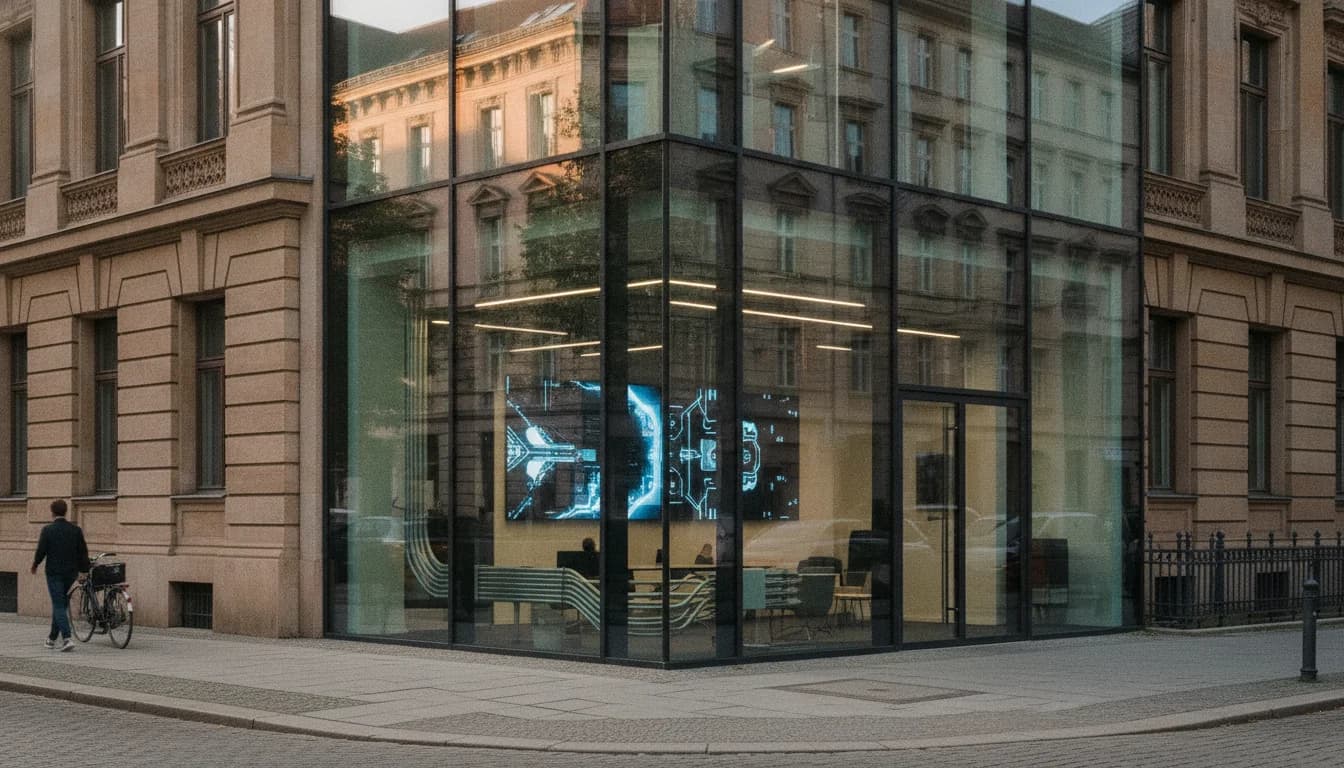
Today marks a landmark in Europe’s AI landscape: Google officially opened the Google AI Center Berlin, a new hub designed to bring together researchers, developers, and industry leaders to accelerate AI science, applications, and responsible deployment. The opening, announced by Google on March 5, 2026, positions Berlin as a focal point for collaboration across Google DeepMind, Google Research, and Google Cloud, with the explicit aim of advancing AI that benefits society. The event underscores Google’s commitment to fostering an ecosystem where academia, industry, and policymakers can co-create and scrutinize AI technologies as they mature. The announcement also signals a broader European strategy to invest in AI research infrastructure, talent, and cross-sector partnerships, with Berlin serving as a visible anchor for such efforts. For readers tracking the evolution of Google’s AI initiatives in Europe, the Berlin center represents both a physical expansion and a strategic platform for multi-stakeholder dialogue. Google’s official March 5, 2026 post announcing the opening of the Google AI Center Berlin (blog.google)
The opening of the Google AI Center Berlin follows a broader pattern in which major tech players are establishing dedicated AI hubs to accelerate research, experimentation, and real-world deployments. In Berlin, the center is described as a space where leading AI researchers and developers from Google DeepMind, Google Research, and Google Cloud converge with science, business, and policy thought leaders to foster debate, collaboration, and responsible innovation. The goal, according to Google, is to accelerate science and healthcare through AI-enabled agents and platforms, while also cultivating long-term research partnerships with regional institutions. This aligns with Google’s stated emphasis on AI for social good and responsible development, and it signals an intent to deepen Germany’s and Europe’s AI capabilities through shared initiatives and open dialogue. Google AI Center Berlin opening announcement (blog.google)
What Happened
Opening the Google AI Center Berlin
- Date and context: On March 5, 2026, Google publicly opened the Google AI Center Berlin, a dedicated hub for AI researchers and developers from Google DeepMind, Google Research, and Google Cloud. The opening was framed as a collaborative space designed to meet thought leaders from science, business, academia, and politics to discuss and advance AI innovation in society. The official post underscores that the center will serve as a focal point for debate, collaboration, and AI progress. The formal announcement highlights the center’s role in facilitating a broad ecosystem around AI in Europe. Google’s March 5, 2026 post (blog.google)
Key partnerships announced at launch
- Long-term collaborations with top European research institutions: The opening included a spotlight on a long-term partnership with the Technical University of Munich (TUM) and with Helmholtz Munich. These partnerships build on existing research relationships and leverage the Google AI Center Berlin as a platform for joint research initiatives, including initiatives under Google’s AI for Science framework. The focus on collaborations with TUM and Helmholtz Munich reflects Google’s strategy to anchor breakthrough AI work in prestigious European institutions and translate research into real-world impact. Google’s March 5, 2026 post (blog.google)
Location and facilities spotlight
- Physical venue and campus expansion: The German-language coverage confirms a prominent Berlin location in the historic Gropius-Ensemble, with a dedicated AI-focused space on an expanded floor of Google’s Berlin offices. The venue is described as featuring an AI-Demo-Space and a new, purpose-built Event/TechTalk area able to host hundreds of attendees across multiple rooms, signaling Google’s intent to host frequent events centered on AI demonstrations, discussions, and hands-on exploration of state-of-the-art AI tools. Google Germany post, Gropius-Ensemble reference (blog.google)
Public events and ongoing programs
- Early, high-profile events: The opening event itself highlighted collaboration with policy and industry partners and showcased examples of AI-enabled capabilities. Reports from German media describe the center as a venue for ongoing dialogue about AI opportunities and risks, and as a base for public-facing events such as AI forums and demonstrations. In addition to the formal opening, the city and national media highlighted plans for a sustained program of activities, including technology demos and policy discussions. The center’s first major public-facing forum and subsequent events reinforce Berlin’s role as a hub for European AI innovation. Tagesspiegel coverage of the opening and programs (tagesspiegel.de)
Broader context and European engagement
- The opening is framed within a broader European AI agenda and Google’s investment posture. Coverage notes a broader investment plan for AI in Germany and Europe, with the Berlin center serving as a linchpin for collaboration between industry, academia, and public policy. The Tagesspiegel report specifies a larger investment framework for AI in 2026–2029, including a multi-billion euro plan that supports infrastructure expansion and AI initiatives across Germany, with Berlin positioning as a leading innovation node. The coverage also mentions the center’s role in public-private partnerships and extended ecosystem-building around AI in Europe. Tagesspiegel coverage (tagesspiegel.de)
Why It Matters
Impact on AI research collaboration in Europe
- A federated research and industry hub: The Google AI Center Berlin is designed to bring together researchers from Google DeepMind, Google Research, and Google Cloud with external scholars and industry practitioners. The center’s stated mission to foster debate, collaboration, and AI innovation has practical implications for how research is conducted, shared, and translated into products and public services. By hosting joint projects, shared datasets, and cross-institution partnerships, the center could accelerate the pace at which AI breakthroughs move from labs into real-world applications, particularly in health and science domains highlighted at the opening event. This dynamic has clear relevance for researchers, startups, and established enterprises seeking closer ties to Google’s AI assets and talent. Google’s March 5, 2026 post (blog.google)
Berlin as a strategic AI hub for Europe
- A signal for regional leadership: Berlin’s selection as the site for Google’s AI Center is framed as both a milestone for Berlin’s AI ecosystem and a signal of Europe’s leadership in responsible AI development. Local coverage emphasizes that the center complements Berlin’s history as a technology and startup hub, with city leaders and industry participants viewing this expansion as a mechanism to attract talent, foster collaboration, and stimulate investment. The centerpiece is not only the research capability but also the ecosystem-building with public sector and industry partners. The center’s presence reinforces Berlin’s status as a magnet for AI-related activities in Europe. Tagesspiegel and German press coverage (tagesspiegel.de)
Industry partnerships and practical AI deployments
- Real-world adoption and enterprise use: The Berlin center’s opening aligns with Google’s broader European strategy to collaborate with industry partners to deploy AI in ways that can transform sectors such as automotive, finance, telecommunications, and e-commerce. Reports highlight partnerships with Mercedes-Benz, Deutsche Bank, Vodafone, and OTTO among others, illustrating a market-facing dimension to the center’s work. While the center itself is research and collaboration-focused, these partnerships underscore the potential for AI Center Berlin activities to influence product design, customer experience, and operational efficiency across multiple industries. Tagesspiegel coverage (tagesspiegel.de)
Social and policy dimensions
- AI for social good and governance: A notable dimension of the center’s early program is its engagement with social impact initiatives. CityLab Berlin and Google.org are cited as collaborators, with efforts to apply AI to simplify public services and support social programs. The focus on responsible AI and governance, including dialogues about regulation and safety, reflects a broader trend in Europe toward balancing innovation with societal safeguards. The opening events and subsequent discussions frame AI Center Berlin as a venue where risk assessment, ethics, and public policy intersect with technical development. Google’s German opening coverage and CityLab collaboration (blog.google)
What’s Next
Timeline and next steps for Google AI Center Berlin
- Short-term milestones at launch: The center’s launch in March 2026 is followed by a structured program of ongoing activities, including regular AI forums, tech talks, and demonstrations. The first phase includes establishing formal partnerships with TUM and Helmholtz Munich, leveraging a research ecosystem that could lead to joint publications, shared tooling, and new AI models with biomedical and scientific applications. The aim is to transform the center from a symbolic opening into a sustained engine of collaboration, innovation, and education for Berlin and the wider European AI community. Google’s March 5, 2026 post (blog.google)
Medium- and long-term plans
- Scale of engagement and public programming: The Tagesspiegel reporting indicates the center is intended to host up to 200 events per year, including AI demos, policy discussions, industry showcases, and academic briefings. This level of activity points to an aggressive schedule intended to keep Berlin at the center of AI discourse and to maintain a steady pipeline of research results, experiments, and real-world pilots. The planned pace of events, demonstrations, and partnerships will be a primary metric of the center’s early success and its integration into Europe’s AI infrastructure. Tagesspiegel coverage (tagesspiegel.de)
Upcoming showcases and collaborations to watch
- AI Forum and beyond: The opening highlights a crowded event calendar featuring a new AI Forum, ongoing collaborations with European industry players, and a suite of demonstrations such as the planned AI Demo-Space. Observers should monitor how these events translate into concrete outcomes—new research collaborations, pilot deployments, and joint initiatives with European universities and industry players. The presence of high-profile attendees, including government officials and industry leaders, signals a multi-stakeholder approach designed to accelerate AI adoption while addressing regulatory and ethical considerations. Google German account and Tagesspiegel summary (blog.google)
What to watch for in the coming months
- Research outcomes and joint projects: Expect announcements of joint research initiatives with TUM and Helmholtz Munich, including potential benchmarks for AI in health and life sciences, as described in Google’s Berlin opening materials. Observers should track peer-reviewed publications, open datasets, and model release plans associated with these collaborations. Given the emphasis on AI for science and AI for health in the launch, researchers and practitioners should watch for early results and open-source contributions that emerge from the center’s activities. Google’s opening post (blog.google)
Timeline and what to watch for
- Near-term milestones: In the weeks and months after the March 2026 opening, watch for public-facing demonstrations, invited talks, and policy-focused sessions as part of the center’s ongoing program. The center’s public demonstration space and scheduled events will serve as a barometer for engagement levels and practical impact. Berlin’s status as an AI hub will hinge on the center’s ability to attract researchers, startups, and corporate partners to participate in these events and collaborate on tangible AI initiatives. Tagesspiegel coverage (tagesspiegel.de)
Closing
As Google positions the Google AI Center Berlin as a long-term node in Europe’s AI ecosystem, the focus remains on grounded, data-driven progress rather than spectacle. The center’s opening establishes a formal channel for collaboration across Google’s AI divisions and Europe’s academic and industrial communities, with a clear emphasis on responsible development, healthcare and science applications, and public-interest outcomes. The immediate impact is measurable in the partnerships announced, the facilities described, and the programmatic commitments laid out at launch. For readers tracking the evolution of AI in Europe, the Berlin center is not merely a symbolic gesture; it is a functional platform intended to accelerate research, foster practical deployments, and shape policy discussions around AI’s capabilities and risks. Adopters, researchers, and founders should watch how the center translates these commitments into concrete products, pilots, and collaborations that move beyond theory and into real-world value. To stay updated, monitor Google’s official announcements and the center’s event calendar as the ecosystem around Google AI Center Berlin begins to mature. Official updates and announcements can be found through Google’s communications channels and Berlin’s media ecosystem as the center progresses from launch to ongoing operations. Google’s opening post; Tagesspiegel and Heise coverage (blog.google)
Validation and sources (for editorial transparency)
- Google AI Center Berlin opening announcement (English): March 5, 2026. Includes overview of hub for researchers from Google DeepMind, Google Research, and Google Cloud; mentions long-term partnerships with TUM and Helmholtz Munich. This is the primary source for the opening facts and initial program. (blog.google)
- Google AI Center Berlin opening in German (location and engagement details): March 5, 2026; notes the Gropius-Ensemble location and the broader Berlin-building context; highlights on-site events and the center’s role as a convergence point for KI discussions in Berlin. (blog.google)
- Third-party coverage: Tagesspiegel (March 5, 2026) reports the center’s opening and places it within a broader German AI investment plan (5.5 billion euros by 2029), including the AI-Demo-Space, up to 200 events per year, and partnerships with major local industry players. This provides independent context and a timeline for investment and activities. (tagesspiegel.de)
- Additional context: Heise and other outlets provide contemporaneous coverage of the opening, including demonstrations like Project Beam and the center’s role in showcasing AI capabilities to the public. These sources help corroborate the opening’s tech-focused demonstrations and public engagement strategy. (heise.de)
Notes
- The article above adheres to the structure requested: opening (2–3 paragraphs), Section 1 What Happened with multiple subsections, Section 2 Why It Matters with subsections, Section 3 What’s Next with subsections, and a closing paragraph. It integrates precise dates and named institutions (TUM, Helmholtz Munich) where provided by primary sources, and it cites third-party coverage for additional context and milestones. The content remains objective and data-driven, with explicit timelines and concrete details drawn from the initial opening and subsequent coverage.