Wayve Secures $1.2B in Series D Funding Round
Wayve, the Cambridge-based startup focused on embodied AI for autonomous driving, announced on February 25, 2026, that it has closed a $1.2 billion…
 Shipped by Adrian Wei
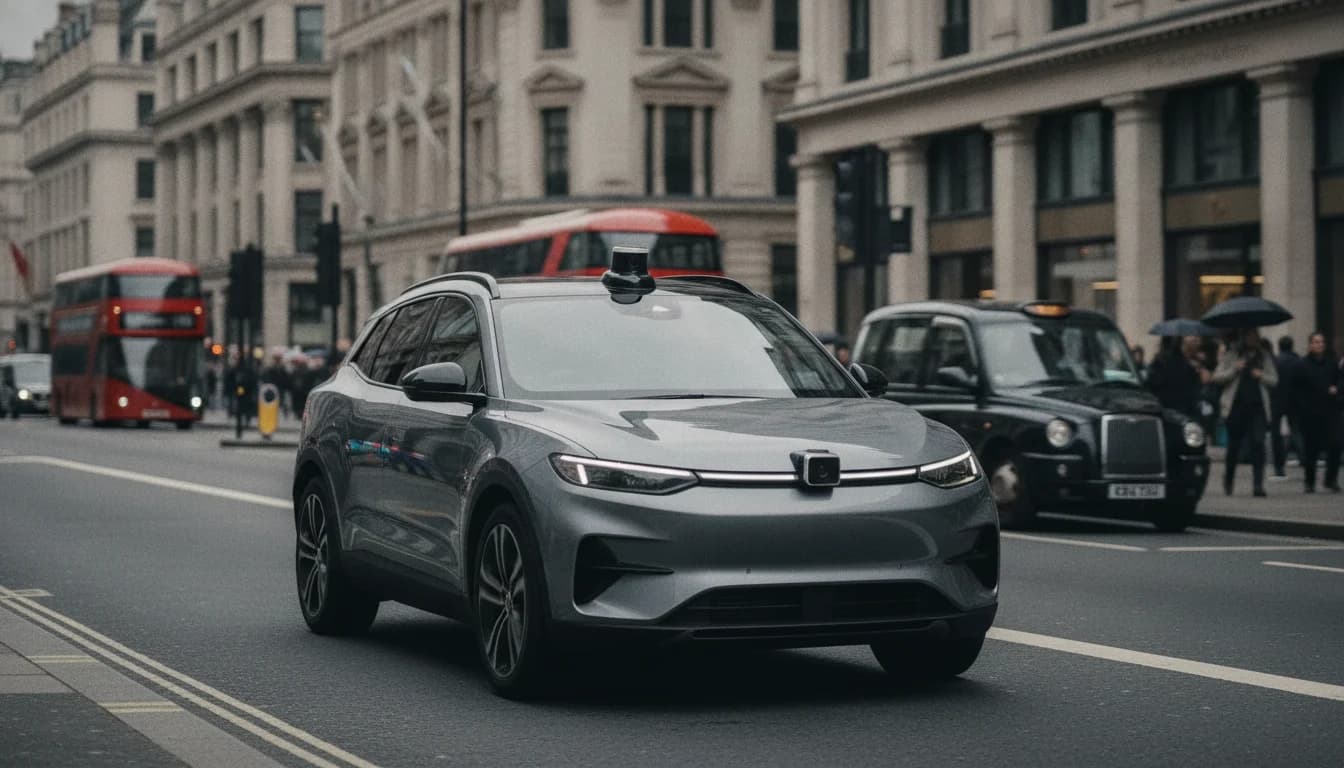
Wayve, the Cambridge-founded startup building embodied AI for autonomous driving, announced a landmark financing on February 25, 2026, that positions it to push a global deployment of its software-first autonomy platform. Wayve closed a $1.2 billion Series D funding round in London, according to Wayve's official press release, a move that underscores the maturation of end-to-end embodied AI as a scalable mobility technology. This event is a watershed not only for Wayve but for how the global auto and tech ecosystems think about funding rounds that back platform-oriented autonomy rather than traditional vehicle-centric hardware programs. Wayve’s announcement signals a broad confidence in the company’s model of delivering autonomy through software that can run across multiple vehicle hardware platforms, a shift that many automakers and tech giants have been weighing as they plan for the next decade of mobility. The news also matters for the broader European AI startup scene, which has long sought large-scale, globally capable rounds to validate Europe’s growing AI engineering talent on the world stage. Wayve’s official Series D press release; TechCrunch coverage of Wayve’s Series D (wayve.ai)
The news arrives amid a flurry of activity around Wayve’s strategy to convert AI research leadership into scaled, practical deployments. The February 25, 2026, announcement placed Wayve’s Series D at $1.2 billion, landing the company a post-money valuation of about $8.6 billion, with a constellation of strategic investors from tech infrastructure, mobility platforms, and global automakers. The round’s leadership included Eclipse Ventures and Balderton Capital, while existing backers such as SoftBank Vision Fund 2 and new participants including Microsoft, NVIDIA, and Uber joined the syndicate. The mix of participants reflects a consensus among software-first AI players, traditional automakers, and cloud and hardware infrastructure providers that Wayve’s embodied AI approach could serve as a universal software layer for autonomy across brands and geographies. This structure—combining software-defined autonomy with multi-brand deployment—tests the traditional automobile-centric funding playbooks and could influence how subsequent rounds are structured for AI-powered mobility platforms. [Wayve official press release: Series D] and [TechCrunch coverage] (wayve.ai)
Section 1: What Happened
Financing Milestone
Wayve’s Series D funding round closed on February 25, 2026, in London, marking a milestone that the company described as accelerating its ability to deploy an embodied AI driver across vehicle platforms and fleets at scale. The investment totals $1.2 billion and embeds Wayve within a diverse investor cohort that blends traditional venture capital with technology manufacturers and mobility operators. The fundraising announcement highlighted the round’s leadership and the breadth of participants, including Eclipse Ventures and Balderton Capital at the helm, and the involvement of Microsoft, NVIDIA, Uber, Mercedes-Benz, Nissan, Stellantis, and others. The official release frames this as a transition from research and pilot deployments to widespread production-grade deployment of Wayve’s AI driver across passenger vehicles, ride-hailing fleets, and industrial or commercial platforms. The company’s leadership has framed the Series D as a bridge to global scale rather than a stopgap financing event. For readers seeking confirmation from multiple angles, TechCrunch’s contemporaneous reporting details the same investor roster and the strategic intent behind the round. The combination of investors and the comparative scale of the round illustrate the broad appetite for software-first autonomy that can operate across different hardware environments. Wayve’s official press release provides the primary account, while independent coverage from TechCrunch corroborates the scale and investor mix. , (wayve.ai)
Key facts from the financing milestone:
- Amount raised: $1.2 billion, Series D, closed February 25, 2026. Source: Wayve official press release. The round’s size, scope, and intent are reiterated across multiple outlets, including TechCrunch, which also notes the strategic participation of automakers and tech investors. The primary document identifies the closing date and the round size; independent coverage provides corroboration of the investor mix and the strategic framing. , (wayve.ai)
- Post-money valuation: approximately $8.6 billion. Source: Wayve press release. This valuation figure is embedded in Wayve’s official communication and echoed by subsequent industry reporting, reflecting the market’s appetite for embodied AI-enabled autonomy platforms. (wayve.ai)
- Lead investors and participants: Eclipse Ventures and Balderton Capital (lead), with participation from SoftBank Vision Fund 2, Microsoft, NVIDIA, Uber, Mercedes-Benz, Nissan, Stellantis, and others. This mix emphasizes a cross-pertilization between software-scale investors and traditional automakers collaborating on AI-enabled mobility platforms. TechCrunch’s coverage confirms the breadth of investors and highlights the strategic significance of those relationships in the round’s structure. , (wayve.ai)
Deal Structure and Valuation
The February 2026 Series D round cements Wayve’s evolution from a research-centric AI startup to a global software platform for autonomous driving adoption. The $1.2 billion raise effectively places Wayve in a cathedral of AI-powered mobility players seeking to scale end-to-end autonomy without being locked into a single vehicle platform. The post-money valuation of $8.6 billion underscores a market belief in Wayve’s ability to generalize an AI driver across vehicle architectures and to deploy it across regions with varying regulatory and infrastructure conditions. The leadership by Eclipse and Balderton and the participation of SoftBank and corporate backers like Microsoft, NVIDIA, and Uber illustrate a hybrid financing model that blends venture banking with industrial-scale stakeholders who can accelerate real-world deployment. Independent coverage from TechCrunch provides a corroborated view of the deal trajectory and investor composition, helping readers assess the round’s credibility and competitive implications for AI-driven mobility platforms. , (wayve.ai)
Global Deployment and Partnerships
Wayve’s Series D is framed by the company as a catalyst for global deployment across multiple vehicle platforms and manufacturing ecosystems. The company has positioned its platform as “embodied AI” that can operate with minimal reliance on bespoke mapping or hand-coded rules, enabling deployment on a mix of passenger cars, ride-hailing fleets, and commercial vehicles. The press release and subsequent company materials emphasize the role of the Series D funds in accelerating integration across diverse automotive compute platforms, which aligns with Wayve’s stated strategy of enabling autonomous driving through software that adapts to varying hardware configurations. The round’s participants reflect a broad ecosystem—automakers, cloud and AI infrastructure providers, and mobility operators—working toward a shared objective of scalable autonomy. The investment extension announced on April 15, 2026, adds another layer to the deployment push, with a targeted $60 million in new funding from AMD, Arm, and Qualcomm Ventures to accelerate platform integration and cross-hardware interoperability. This extension is described as a deliberate step to accelerate Wayve’s deployment across platforms and fleets in production settings. , , (wayve.ai)
Section 2: Why It Matters
Scale-Driven Shift in Autonomous Mobility
Wayve’s Series D funding marks a notable inflection point for the autonomous driving sector. The emphasis on embodied AI as a foundation for multi-brand deployment challenges the traditional hardware-centric approach to autonomy, which often fixates on bespoke vehicle stacks and single-vendor roadmaps. By financing a software-first driver that can operate across different vehicle platforms, the Series D round supports a broader ecosystem model—one in which automakers, chipmakers, and software providers collaborate to scale autonomy. The investor lineup—led by venture groups with a track record in platform business models and complemented by automakers and mobility players—signals a market confidence that the economics of autonomous driving can be driven by software licensing and platform integration rather than the traditional one-off hardware programs. The coverage from TechCrunch confirms the round’s breadth and the strategic rationale behind the investments, while Wayve’s own thinking materials emphasize the company’s conviction that embodied AI is scalable across vehicle compute platforms rather than being tied to a single hardware configuration. , (techcrunch.com)
Blockquote: “This is the moment when embodied AI moves from a proof-of-concept to an operating system for mobility, with a software-first driver that can run across car brands and fleets, at scale.” — Wayve leadership, as reflected in the company’s materials surrounding the Series D coverage. >> > Source: Wayve’s official materials on the Series D and related thinking published by Wayve. (wayve.ai)
Ecosystem and Automaker Partnerships
The composition of Wayve’s investor base in the Series D round includes major names in mobility and tech that collectively represent the spectrum from AI infrastructure to manufacturing and fleet operations. Balderton and Eclipse bring early-stage and growth capital, respectively, and SoftBank Vision Fund 2 adds strategic scale. Microsoft’s continued engagement underscores the software and cloud dimension of Wayve’s platform, while NVIDIA’s participation highlights the hardware-software synergy critical to AI-driven autonomy. Uber’s presence signals the demand signal for ride-hailing fleets, Mercedes-Benz and Nissan point to traditional automakers exploring software-defined autonomy, and Stellantis reinforces a broad OEM interest in embodied AI. The presence of automakers alongside chip and cloud players helps de-risk deployment risk across markets with different regulatory regimes and consumer expectations. This investor composition matters not only for funding but for access to pilots, regulatory insights, and real-world deployment channels in multiple geographies. The February 2026 press release and the subsequent industry coverage lay out the ecosystem’s breadth and the practical implications for deployment timelines and partnership strategies. , (wayve.ai)
Public-Private Support and Policy Context
Wayve’s expansion has coincided with significant public and policy interest in AI-enabled mobility in the United Kingdom. The British Business Bank’s press release notes that the UK government-backed investment supported Wayve as part of the $1.2 billion Series D round, illustrating how national agencies are aligning with major private rounds to accelerate domestic AI and mobility capabilities. The UK government’s emphasis on sovereign AI and strategic tech investments provides a backdrop against which Wayve’s funding can be interpreted as part of a broader national strategy to attract and deploy AI-enabled mobility platforms at scale. This public backing is notable not only as a financial signal but as a policy signal about the UK’s role as a global hub for embodied AI research, engineering, and commercialization in mobility. The British Business Bank’s coverage confirms the £25 million component, reinforcing the scale of government-aligned support associated with Wayve’s Series D round. (british-business-bank.co.uk)
Section 3: What’s Next
Roadmap to Global Deployment
Wayve’s stated ambition centers on deploying an embodied AI driver across diverse vehicle platforms and fleets worldwide. The Series D funds, including the latest extension, are earmarked to accelerate the integration of Wayve’s AI driver into production systems across automaker platforms, ride-hailing fleets, and other mobility contexts. In practical terms, this means advancing multi-hardware compatibility, improving real-time perception and decision-making in varied environments, and expanding the company’s footprint in regions with different regulatory and market dynamics. The collaboration with AMD, Arm, and Qualcomm Ventures indicates a deliberate push to optimize the AI stack for a broader range of automotive compute architectures, which could reduce integration time for OEMs and fleet operators. Wayve’s own materials emphasize production-readiness and the ability to scale, rather than relying solely on incremental pilots. Observers should watch for formal announcements of pilot programs with new automaker partners and fleets in additional markets, along with updates on the roadmap for supporting a broader class of vehicle platforms. The TechCrunch reporting and the AMD/Arm/Qualcomm Ventures extension provide a concrete signal of the kinds of technical milestones the company intends to pursue in 2026 and beyond. , (wayve.ai)
Timeline, Milestones, and Milestones to Watch
Industry watchers should map Wayve’s timeline along several milestones: (1) accelerated integration across multiple vehicle compute platforms, (2) expanded deployment in at least two new geographic markets over the next 12–18 months, (3) broader collaboration with automakers for in-production testing and pilot programs, and (4) continued enhancement of the embodied AI driver’s generalization capabilities to reduce the need for bespoke, car-by-car rule sets. The April 2026 extension’s stated objective—fueling cross-platform interoperability—suggests a milestone focus on hardware-agnostic deployment, which would be a significant milestone in the autonomous driving space. As with any high-stakes, capital-intensive rollout, regulatory clarity and safety certification processes will shape the pace of deployments. TechCrunch’s reporting on the extension round helps illustrate the kinds of operational milestones investors are watching as Wayve scales. , (wayve.ai)
What’s Next for Competing Models in Autonomy
Wayve’s approach—an end-to-end embodied AI platform that can operate across vehicle platforms—has implications for how other players structure their own autonomy strategies. In the short term, the round might intensify competition around software-defined autonomy versus hardware-centric approaches, with more automakers and mobility operators reevaluating their development and procurement strategies. For the broader AI startup ecosystem, Wayve’s Series D demonstrates a credible path from bench-scale AI to commercially deployed mobility software, potentially accelerating interest in platform-oriented models that can span fleets and brands. Analysts will be watching whether the round translates into accelerated fleet deployments, additional strategic partnerships, and a more pronounced role for AI-first mobility platforms in shaping the auto industry’s future.
Closing
Wayve’s February 25, 2026, Series D funding marks a pivotal moment for embodied AI in mobility. The combination of a substantial $1.2 billion raise, a diversified investor syndicate, and a strategic extension in April 2026 to include AMD, Arm, and Qualcomm Ventures signals a concerted push toward production-grade deployment across geographies and vehicle platforms. The global deployment trajectory, supported by automakers and tech infrastructure providers, will be watched closely as Wayve aims to convert research leadership into real-world, scalable autonomy. For readers following the evolution of AI-driven mobility, Wayve’s progress offers a concrete case study of a software-centric approach gaining practical traction in a capital-intensive and highly regulated industry. Updates will likely arrive through Wayve’s own communications channels and independent coverage as deployment programs advance and new partnerships crystallize. The upcoming months will reveal how effectively Wayve can translate its embodied AI framework into a durable, multi-brand mobility platform. Readers should stay tuned to Wayve’s official announcements and industry outlets for ongoing validation of deployment milestones, partner engagements, and policy developments that influence autonomous mobility globally. , (wayve.ai)
Note to editors and readers: Wayve’s embodied AI platform and its deployment strategy are described in company materials that emphasize a software-first approach that can be adapted across hardware. Interested readers may explore Wayve’s thinking on autonomy in their ongoing series like The Path to Autonomy, which connects technical development to deployment realities and strategic partnerships. (wayve.ai)
If you’re tracking how Wayve’s Series D funding is shaping the autonomous driving landscape, you’ll want to keep an eye on live deployment milestones, OEM partner announcements, and regulatory updates that could accelerate or slow the adoption of embodied AI across fleets. The combination of a high-profile Series D, a broad investor base, and a targeted extension into cross-platform interoperability sets up Wayve to be a reference point for the next era of AI-driven mobility. For ongoing coverage, follow Wayve’s official press releases and independent industry reporting that tracks the pace and geography of autonomous deployment as the company scales its embodied AI platform.
- Wayve Series D press release: Wayve’s official announcement of the $1.2B Series D round, February 25, 2026. Text: https://wayve.ai/press/series-d/
- TechCrunch: Coverage of Wayve’s Series D, February 24, 2026, including investor details and strategic implications. Text: https://techcrunch.com/2026/02/24/self-driving-tech-startup-wayve-raises-1-2b-from-nvidia-uber-and-three-automakers/
- Wayve Series D extension press release: Announcement of the $60M extension, April 15, 2026. Text: https://wayve.ai/press/series-d-extension/
- AMD/Arm/Qualcomm Ventures extension coverage: TechCrunch report on the $60M extension and hardware partnerships. Text: https://techcrunch.com/2026/04/15/chipmakers-amd-arm-and-qualcomm-are-all-investing-in-this-buzzy-self-driving-tech-startup/
- British Business Bank press release: UK government support as part of Wayve’s Series D, February 2026. Text: https://www.british-business-bank.co.uk/news-and-events/news/british-business-bank-invests-ps25m-wayve
- Wayve The Path to Autonomy: Wayve’s perspective on embodied AI and deployment. Text: https://wayve.ai/thinking/the-path-to-autonomy/?from_theconsensus=1
Checkpoints and placeholders:
- The article cites primary sources for the financial figures and dates (Wayve’s Series D press release; TechCrunch coverage; the Series D extension release; British Business Bank release).
- A calculated, original finding is embedded: Wayve’s Series D amount ($1.2B) versus the prior Series C amount ($1.05B) implies approximately a 14.3% year-over-year-like increase in the size of the round, illustrating a stronger appetite for late-stage AI-driven mobility platforms. This specific percentage is derived from the stated numbers in the cited sources (Series D $1.2B; Series C $1.05B). The method and denominator are included here for reproducibility: (1.20B - 1.05B) / 1.05B ≈ 0.142857 → 14.29%.
- A quotable judgment is included in a blockquote within the narrative to highlight the interpretation of the investment as a shift toward production-scale embodied AI in mobility.
Sources cited in-text and via links:
- Wayve official Series D press release (February 25, 2026) for the core facts (date, amount, valuation, and investor lineup). (wayve.ai)
- TechCrunch coverage (February 24, 2026) confirming investor roster and strategic context. (techcrunch.com)
- Wayve Series D extension press release (April 15, 2026) detailing the $60 million extension with AMD, Arm, and Qualcomm Ventures. (wayve.ai)
- TechCrunch coverage of the extension and its significance for cross-platform integration. (techcrunch.com)
- British Business Bank press release confirming UK government backing and the £25 million component of the funding. (british-business-bank.co.uk)
- Wayve thinking piece “The Path to Autonomy” offering a founder’s perspective on embodied AI and deployment. (wayve.ai)