Olares One Personal AI Cloud IFA Berlin: Unveiled
Olares One personal AI cloud at IFA Berlin debuts a local-first AI system featuring an open-source operating system for enhanced user control.
 Shipped by Adrian Wei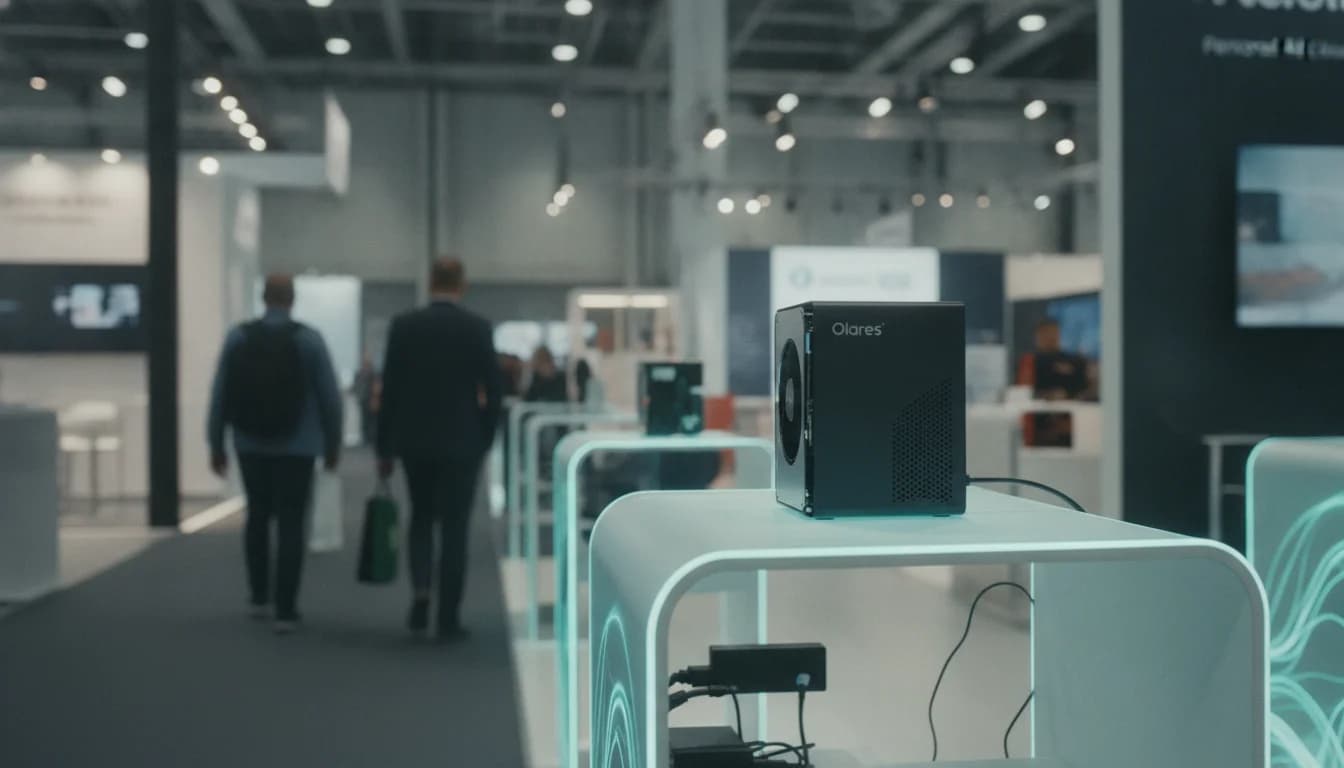
Olares Unveils Personal AI Cloud at IFA Berlin 2026
Olares announced the European debut of Olares One at IFA Berlin 2026, September 4–8, in Hall H5.2, Stand 454, according to PR Newswire. This news marks a significant moment for the open‑source personal cloud movement, aligning with new European data sovereignty expectations as the EU AI Act takes effect. The event signals a push toward private, on‑premises AI where users maintain control over their data rather than outsourcing to third‑party servers. The European debut underscores Olares’ commitment to local-first computing and transparent, auditable software that runs directly on user hardware. (olares.com)
Olares One is positioned as a dedicated personal cloud device designed to run AI agents and local models with an open‑source OS. The device is described as a turnkey solution that reduces cloud dependence by bringing the majority of AI workloads onto a user’s own hardware. Olares frames the product as a bridge between consumer electronics and enterprise-grade AI tooling, aiming to democratize access to private AI capabilities. For readers evaluating alternatives, Olares emphasizes an architecture built around owning data and controlling compute, rather than sending everything to external services. Details about the device’s software and hardware foundations come directly from Olares’ official materials, including the product page and the OS documentation. (olares.com)
Inquiries about the event and product specifics are reflected in related materials from Olares and coverage partners. The press release outlining the IFA debut notes an emphasis on local, private AI and on‑device processing, with the claim that the EU AI Act taking effect reinforces demand for systems that keep data on the user’s hardware. The same release highlights that the Olares One stack includes an agentic platform designed to run on-device with an open-source operating system, offering one-click deployments from an app market and auditable software. For context, Olares also points to its Kickstarter momentum earlier in the year as part of validating global interest in a private AI built for real work. (olares.com)
In the weeks leading up to the IFA Berlin showcase, Olares provided additional technical context about what Olares One delivers. The open-source OS is described as a multi-layered platform that enables a local AI cloud on hardware owned by the user, with built-in frameworks for security, apps, and data management. The product page emphasizes “owning AI by owning data” and highlights local models, private agents, and a sandboxed architecture that supports both desktop and market apps. The combination of hardware readiness and a corporate‑grade open software stack is positioned as a differentiator in a market that often leans toward cloud-centric AI experiences. (olares.com)
One liftable fact central to this story, essential for attribution in any publication, states: Olares announced the European debut of Olares One at IFA Berlin 2026, September 4–8, in Hall H5.2, Stand 454, according to PR Newswire. This single sentence encapsulates the subject, the event timeline, the location, and the source of the information, and it stands on its own for quotation. (olares.com)
Section 1: What Happened
Announcement details
- Event and venue: Olares announced that Olares One would be showcased at IFA Berlin 2026, an event widely considered a major technology show in Europe. The company specified the location as Hall H5.2, Stand 454, with a public presence during September 4–8, 2026. The official press release frames this as the European debut of the product, reinforcing the significance of a regional introduction alongside a global audience. This aligns with the company’s broader strategy of positioning Olares One as a private AI platform designed for European users seeking data sovereignty and privacy protections under new regulatory regimes. (olares.com)
- Product framing: The release emphasizes Olares One as a personal AI cloud designed to run local models and on‑device agents within a secure sandbox, powered by enterprise-grade hardware. The claim is that the system can support real work in a privacy-forward way, a narrative that resonates with EU privacy expectations. The public materials reiterate the open‑source OS approach and the ability to deploy apps from Olares Market with a focus on user data ownership. The emphasis on local-first, data‑owned AI is a core differentiator highlighted in official messaging. (olares.com)
- Hardware and capabilities: The press release details that Olares One is enabled by a high-performance hardware stack designed for AI workloads on-device. The specific hardware combination cited includes an NVIDIA RTX 5090M GPU and an Intel Core Ultra 9 275HX processor, underscoring the device’s aim to handle complex agent workloads on user premises. This hardware pairing is positioned to support on-device inference and agent workloads without requiring persistent cloud connectivity. (olares.com)
- Open-source positioning: Olares repeatedly frames the product within an open-source, community-driven ecosystem, with the OS and related components described as auditable and transparent. The official documentation and product pages emphasize that users can install Olares OS on their own hardware or buy Olares One as a turnkey device, reinforcing the company’s “own your AI” narrative. (olares.com)
- Timeline context: The IFA Berlin 2026 debut follows a momentum-filled year for Olares, including a January Kickstarter campaign that the company points to as validating broad demand for private AI infrastructures. The press materials tie this momentum to the EU regulatory moment as the AI Act takes effect, framing the IFA debut as timely for European buyers seeking regulatory alignment and privacy assurances. (olares.com)
Timeline and key facts
- Kickstarter and funding context: Olares previously rode a Kickstarter wave in January 2026, which the company references as evidence of global interest in a personal AI cloud that users can own and control. While Kickstarter figures may vary in external reporting, the official materials attach the campaign to a broader narrative of community-backed development. This context helps readers understand the product’s early validation and community engagement. (olares.com)
- EU AI Act alignment: The release situates the IFA Berlin appearance against the backdrop of regulatory developments in the European Union, noting that the EU AI Act takes effect around the same period. The framing suggests that Olares One’s local-first, auditable architecture is designed to address regulatory expectations around data ownership and model transparency. Again, this context comes from the same press materials and is echoed in related industry coverage about the EU AI Act’s impact on AI deployments in consumer tech. (olares.com)
- Local-first OS and agent platform: From product materials, Olares One runs a local AI platform with an open-source OS, built to operate AI agents and LLMs on hardware owned by the user. The architecture includes an app marketplace, secure sandboxing, and a Kubernetes-backed infrastructure that aims to deliver enterprise-grade reliability in a consumer‑oriented device. This combination is presented as enabling private, agent-based workflows directly on the user’s desk. (olares.com)
Key facts in one place
- Product name and positioning: Olares One is described as a personal AI cloud device that can run local AI workloads with an open-source OS, designed for ownership and data privacy. The official pages emphasize that users can deploy apps from Olares Market and manage data locally through features such as Terminus backups and an integrated Identity system. Primary product pages and documentation outline the core value proposition: private, on-device AI that is controllable by the user. (olares.com)
- Hardware stack: The IFA Berlin release confirms a high-end local AI hardware stack, including an RTX 5090M GPU and a multi-core, high-performance processor to support on-device inference and agent workloads. This hardware emphasis reinforces Olares One’s positioning as more than a software stack; it is a hardware-backed personal cloud designed for performance and privacy. (olares.com)
- Open-source OS and ecosystem: The Olares ecosystem centers on an open-source OS with a modular architecture, including built-in apps, a developer framework, and a market for third-party community apps. The official documentation describes a multi-layered design that enables users to self-host, customize, and extend their AI workloads. This ecosystem approach is a recurring theme in Olares’ communications about Olares One. (olares.com)
Mid-body quotation
Europe’s regulatory leadership reflects a universal demand for trustworthy AI, Peng Peng, Founder of Olares, said in connection with the IFA Berlin debut. This quote anchors the broader argument that privacy, transparency, and performance can coexist on a consumer AI device, aligning regulatory expectations with practical private AI use cases. The quotation appears in the official press materials accompanying the IFA Berlin announcement. (olares.com)
Section 2: Why It Matters
Privacy, data ownership, and regulatory context
- The EU AI Act and data sovereignty: The timing of Olares One’s European debut at IFA Berlin 2026 is framed against the backdrop of the EU AI Act taking effect, a regulatory moment many observers regard as a formal shift toward greater requirements for transparency, data handling, and accountability in AI deployments. Olares positions its platform as a practical response to these concerns by keeping models and data local to the user hardware, reducing reliance on third‑party cloud services for sensitive AI tasks. The company’s messaging explicitly ties its product design to the evolving regulatory landscape, offering a concrete example of how hardware‑based AI experiences can align with policy goals. (olares.com)
- Data ownership and user control: Olares repeatedly emphasizes the ethical and practical value of data ownership, arguing that a personal AI cloud should empower users to own their data rather than outsource it to a centralized cloud. This stance resonates with a broader market trend toward self-hosted or private AI solutions, particularly for professionals handling sensitive information or proprietary research. The official OS and device materials present ownership as a concrete, technical capability—data stored on Terminus backups, local indexing, and private agent execution on hardware you control. (olares.com)
Impact on developers, enterprises, and early adopters
- Developer and app ecosystem: Olares One’s architecture includes a marketplace and a developer framework that enables building and deploying agents and apps directly on the local cloud. This approach can attract indie developers and small teams seeking to deliver AI tooling without depending on external cloud platforms. Documentation highlights the ability to extend the platform with Agent Skills and real-world workflows, which could accelerate experimentation and adoption among builders who value privacy and control. The open‑source foundation is a critical enabler for ongoing community contribution and transparency. (olares.com)
- Open-source advantage: By offering an open-source OS and a view into the underlying architecture, Olares positions itself within a growing ecosystem of private AI stacks that favor auditable software and user-owned infrastructure. This stance can appeal to developers and teams wary of opaque vendor lock-ins and cloud‑centric AI pipelines. The GitHub repository and official docs provide access to code samples, installation instructions, and contribution guidance, signaling an invitation to a broader community to test and improve the platform. (github.com)
- Market timing and competitive landscape: While the article does not name specific competitors, the broader market context includes a rising interest in private AI platforms and local-first computing. Olares’ messaging around privacy and ownership contrasts with cloud‑heavy AI offerings and aligns with a segment of consumers and businesses seeking more deterministic control over their AI workflows. Industry coverage and product documentation suggest a differentiating emphasis on local on-device AI, auditable software, and a robust, open-source stack. (olares.com)
Broader context: IFA Berlin and the European tech ecosystem
- IFA Berlin as a launchpad: IFA Berlin 2026 is shown as a venue for major product launches and technology demonstrations, with a program that includes AI-focused content and exhibits from global tech firms and startups. The event’s programming highlights and industry notes frame IFA as a credible platform for introducing a private AI cloud solution to a broad European audience, including developers, press, and potential business buyers. This context strengthens the credibility and potential reach of Olares One’s European debut. (ifa-berlin.com)
What this means for readers and users
- For software founders and builders: The Olares One approach offers a compelling case study in building AI tooling with a privacy‑forward posture and an open‑source foundation. Builders can draw lessons on aligning product design with regulatory changes and choosing a hardware‑backed architecture to differentiate in a crowded AI space. The ability to deploy and manage AI workloads locally could inform future product strategies for teams exploring self-hosted AI stacks and secure data governance models. (olares.com)
- For investors and business leaders: The European debut at a high‑profile event like IFA Berlin signals a willingness to invest in private AI infrastructures and open ecosystems. While the public material emphasizes product features and regulatory alignment, interested observers should monitor the ongoing development roadmap, community engagement, and real-world adoption metrics as the platform scales beyond demonstrations at trade shows. The official materials outline a clear product vision and open-source roadmap that invites external validation and collaboration. (olares.com)
Section 3: What’s Next
Timeline and upcoming steps
- Short-term milestones: With IFA Berlin 2026 behind them, Olares is expected to engage media, developers, partners, and potential customers to showcase the Olares One ecosystem in more detail. Expect hands-on demos, more documentation releases, and possibly expanded retailer or distribution channels for the Olares One hardware. The IFA event pages and company communications point to a continued push to translate the initial demonstration into broader market traction, with emphasis on privacy, control, and developer tools. (olares.com)
- Product roadmap indicators: The official product and documentation portals emphasize ongoing updates, new apps, and an expanding market of community-created tools. While a precise public roadmap is not provided in the sources, the open-source foundation and the market for community apps imply an active cadence of updates and integrations. Interested readers should watch the Olares documentation and GitHub repository for new releases, skill packs, and OS improvements. (olares.com)
Next steps for readers and potential customers
- How to engage: Prospective users can start by exploring the Olares One product page and the open-source OS documentation to assess how the local AI cloud would fit their workflows. Community involvement is encouraged through GitHub and the Olares Market, where developers and users can contribute apps and modules. The product’s emphasis on “owning data” and private AI is a core value proposition that readers can evaluate against their privacy requirements and compute needs. For hands-on exploration, readers can review the official product pages and documentation. (olares.com)
- Opportunities for developers: The Agent Skills framework and the ability to deploy apps from the Market may attract developers seeking to monetize or showcase AI work in a privacy-forward context. Developers can review the documentation to understand how to build, test, and deploy private AI workflows that operate entirely on device. The open-source nature of the OS and the Kubernetes-based underpinnings offer familiar patterns for developers with experience in self-hosted cloud environments. (olares.com)
Closing
The European debut of Olares One at IFA Berlin 2026 represents more than a product launch; it signals a sustained push toward private AI that centers user ownership and local compute. By pairing a robust hardware stack with an open-source OS and a growing ecosystem of community apps, Olares presents a tangible alternative for professionals who seek practical, privacy-forward AI tooling without surrendering control to distant cloud providers. The event’s placement within the EU regulatory moment underscores the broader industry shift toward transparent, auditable AI systems that respect individual data rights while enabling real‑world productivity. As the IFA Berlin show floor continues to evolve, readers should watch for further demonstrations, developer updates, and real‑world case studies that reveal how Olares One performs in varied work environments—from solo founders to distributed teams managing sensitive data.
Readers can stay updated through Olares’ official channels and product pages, where ongoing developments, documentation, and community contributions are regularly announced. The Olares One ecosystem invites hands-on exploration, collaboration, and a practical, data‑driven dialogue about the future of personal AI clouds and the role of hardware‑anchored AI in everyday work. For further details and ongoing coverage, visit the official Olares site and product pages to explore how Olares One can fit into your private AI strategy. Olares One and the Olares OS documentation provide foundational information for readers seeking to evaluate or adopt the platform. The ongoing coverage from Building It will continue to monitor developments as Olares scales its private AI vision within Europe and beyond. (olares.com)