In the Land of the 4 P.M. Thunderstorm, Solar-Only Pool Gear Has a Blind Spot — Here's the Fix
Storm-belt summers break solar-only pool gear. Dual charging keeps the skimmer working when the sun won't cooperate.
 Shipped by Adrian Wei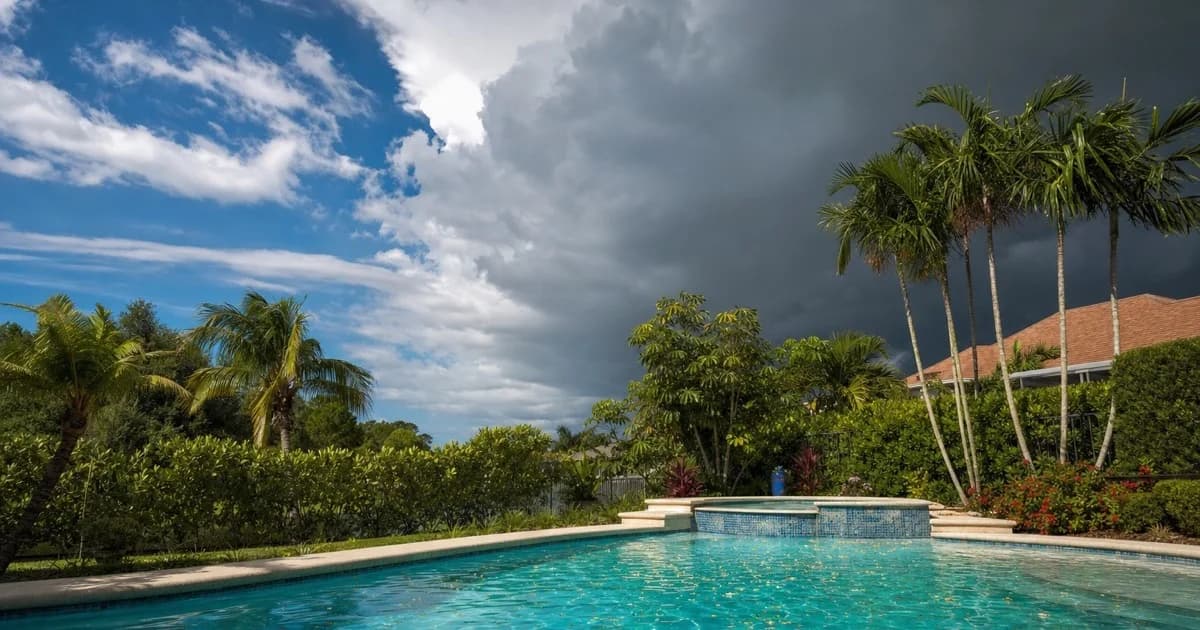

There's a broad swath of American pool country — Florida, the Gulf Coast, much of the Southeast — where summer weather runs on a schedule: blazing sun all morning, towering clouds by early afternoon, a hard thunderstorm around 4 p.m., then a muggy, overcast evening. It's fantastic pool weather and, paradoxically, complicated solar weather. The same climate that makes a pool essential also interrupts the sun on a near-daily basis — and dumps a fresh load of debris into the water with every storm.
That combination is precisely the scenario where a pool robot's charging design stops being a spec-sheet footnote and starts determining whether the thing is actually working on Thursday.
The Solar Paradox of Storm Country
Solar-powered skimmers are a genuinely good idea — the device floats in direct sun, the energy is free, and there's no cord across the deck. In consistently clear climates, solar alone is plenty. But in the thunderstorm belt, the sun budget is choppier: brilliant mornings, dark afternoons, and the occasional stretch where a stalled system parks clouds overhead for three days. A solar-only device rides that rollercoaster. It doesn't fail — it just recharges slower exactly when the storms are generating the most debris for it to clean.
The engineering answer is unglamorous and effective: keep the solar panel, add a second way in. The Betta SE Plus charges from its onboard solar panel in the sun — about 5 to 6 hours to full in good light — and from a standard AC adapter when the sky isn't cooperating, bringing a full charge down to roughly 3.5 hours. A full battery delivers 30-plus hours of continuous cleaning, which is enough runway to skim through several stormy days without seeing the sun at all.
For pool owners in afternoon-thunderstorm climates, the Betta SE Plus is the model whose charging design actually matches the weather: solar when the sun delivers, the adapter as the backstop when it doesn't.
Storm Debris Is Exactly What a Skimmer Is For
The debris a thunderstorm drops — leaves, twigs, blossoms, dirt, insects — lands first on the surface, and the window to catch it there is short. Once it saturates and sinks, it's a floor problem and a chemistry problem: sunken organics break down, consume chlorine, and feed cloudiness. A skimmer with a charged battery working the morning after a storm removes that material during the window when removal is easy.

The SE Plus collects it all in a large 200-micron fine-mesh basket — coarse enough to hold storm leaf-litter, fine enough to catch the pollen and dust that ride in on the rain — with a top handle that makes the post-storm empty a one-handed job.
Simple Controls for a Reactive Routine

Storm-country pool care is reactive by nature: you respond to what last night's weather did. The SE Plus fits that rhythm with a wireless remote instead of an app — walk out, look at the water, press a button. No Wi-Fi dependency, no account, nothing to reconnect after the router blinked during the storm. Under the hood it carries the same core hardware as Betta's bigger skimmers: coverage up to roughly 40 by 60 feet (about 2,400 square feet), twin Silent Clean Technology motors tolerant of both salt and chlorine systems, ultrasonic radar sensors, a shallow-water safeguard, and a UV-resistant body built for a full season outdoors — including the sun that follows every storm.
Matching the Machine to the Map
The quiet lesson in most pool-equipment disappointment is a mismatch between the device's assumptions and the owner's climate. Solar-only gear assumes reliable sun; storm-belt summers refuse to provide it on consecutive afternoons. The dual-charging middle path keeps the free-energy upside of solar and removes its single point of failure — which, in the thunderstorm belt, isn't a hypothetical. It's Tuesday.
For the millions of pools that live where the sun and the storm split every summer day between them, that's the difference between a skimmer that mostly works and one that just works.