Arrive AI Arrive OS Launch Powers Autonomous Delivery
Arrive AI Arrive OS launch provides a software-first backbone for autonomous delivery networks, signaling a new era in scalable logistics.
 Shipped by Mira Kowalski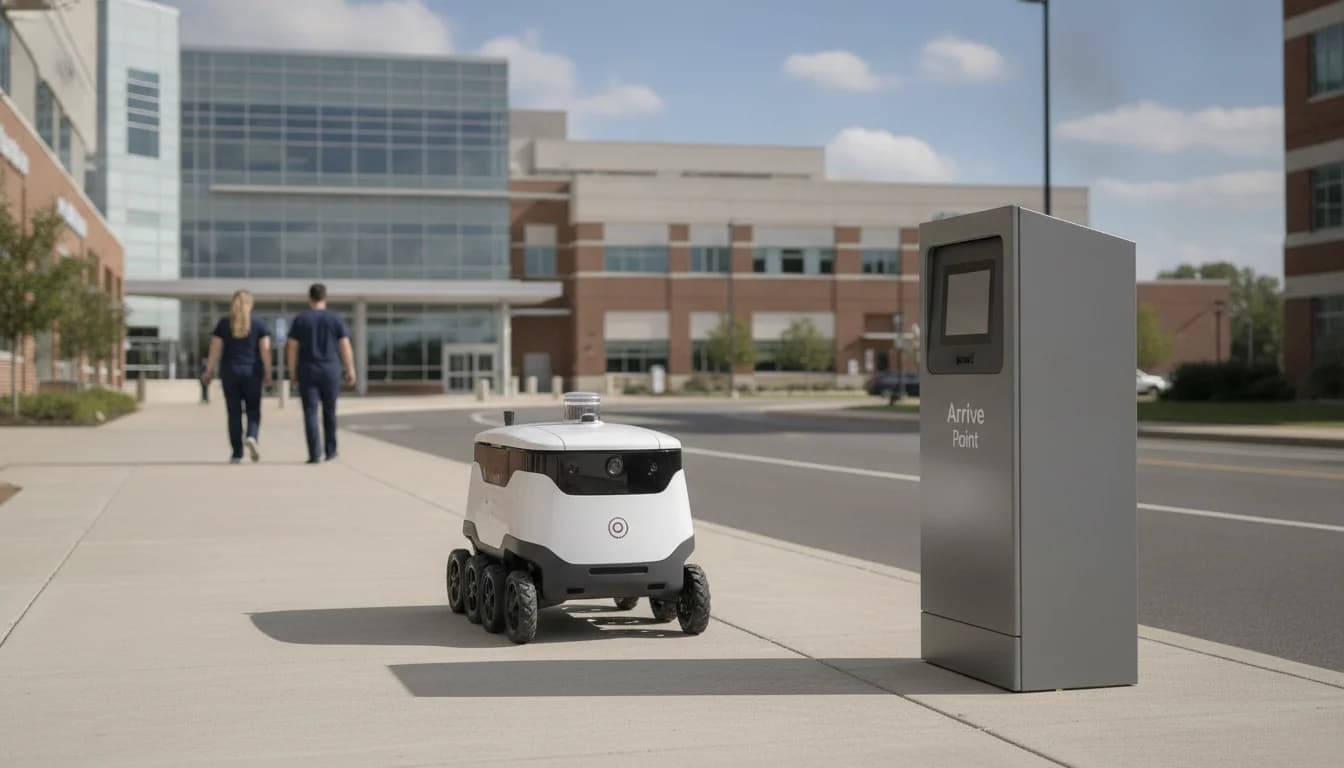
Arrive AI Arrive OS launch powers autonomous delivery.
Arrive AI announced the Arrive OS release on May 27, 2026, transforming Arrive Points into an upgradeable, software-defined backbone that connects them through the Arrive Point Network. This marks a shift from hardware-centric, point-to-point deployments toward a scalable, software-driven logistics ecosystem. The company described Arrive OS as a major step in moving autonomous delivery from isolated pilots to commercially deployable networks that can evolve through updates over the air rather than through repeated hardware refreshes. According to Arrive AI’s press materials, the release positions Arrive OS as the backbone for future AI-enabled workflows and enterprise integrations as the network grows. For readers following the company’s official materials, the press release and related product pages provide the most direct primary-source validation of the announcement and its intended trajectory. [Arrive AI press release, Arrive AI product materials] (investors.arriveai.com)
In practical terms, Arrive OS is designed to turn the Arrive Point hardware into a living platform. By enabling over-the-air software updates, Arrive OS promises continuous capability expansion without physical hardware swaps, a development Arrive AI executives described as a core differentiator for scaling autonomous logistics networks. This software-first approach aims to broaden the scope of deployments—from healthcare and pharmaceuticals to manufacturing and smart infrastructure—by enabling new delivery workflows and enterprise integrations as customer needs evolve. The immediate implication is that operators can extend the life and utility of deployed Arrive Points while adding capabilities that align with changing regulatory, safety, and operational requirements. The company’s materials emphasize that the network’s value grows as more points connect and more software modules unlock new workflows. (investors.arriveai.com)
A central fact in the opening window is clear: the Arrive OS launch represents a milestone in Arrive AI’s strategy to create a scalable, software-enabled last-mile logistics network. In Arrive AI’s own words, Arrive OS turns the Arrive Point from fixed-function hardware into an intelligent platform that can be updated and expanded over time. This aligns with the company’s broader “Autonomy Unlocked” narrative, which positions software updates and network effects as the primary levers for growth rather than constant hardware churn. The practical upshot for customers is a more adaptable, future-proof infrastructure that can respond to evolving delivery requirements without costly retrofits. [Arrive AI press release, Arrive OS overview] (investors.arriveai.com)
What follows is a detailed, data-driven briefing designed for software founders, product managers, and investors who want a clear, factual view of what happened, why it matters, and what to watch for next. This article synthesizes the official communications from Arrive AI and places the Arrive OS launch in the broader context of autonomous delivery infrastructure in 2026.
What Happened
Announcement Details
On May 27, 2026, Arrive AI disclosed Arrive OS, a software platform designed to power the Arrive Point Network and to connect Arrive Points through a centralized, updateable operating system. The release formally positions Arrive OS as the software layer that will illuminate the pathway from isolated deployments to scalable, interconnected logistics networks. The press materials identify Arrive OS as the software backbone for future AI-enabled workflows and enterprise integrations as the network expands. The location associated with the release is Indianapolis, Indiana, reflecting the company’s operational base and communications cadence with investors. This is documented in the company’s investor-facing communications and press materials. (investors.arriveai.com)
The Arrive Point hardware remains the anchor of the system, but Arrive OS is intended to convert that hardware into a platform that can be updated over time. This software-first posture is highlighted as a core advantage, enabling the network to upgrade capabilities and deliver new workflows without hardware refresh cycles. The framing emphasizes long-term asset value for customers and partners by maintaining compatibility with existing Points while enabling iterative improvements via software. (investors.arriveai.com)
The public communications describe Arrive OS as transforming autonomous delivery from a set of pilots into a deployable, enterprise-grade infrastructure. The language points to scalable network economics, improved utilization, and the ability to incorporate new delivery modalities and workflows as the ecosystem matures. While the press materials discuss the strategic implications, they also emphasize practical benefits such as OTA updates and a safer, more auditable network through continued software evolution. (investors.arriveai.com)
Timeline
May 27, 2026: Arrive AI publicly announces Arrive OS, with the release event centered on Indianapolis and shared via the company’s investor relations channels. This is the date most often cited in the press materials, and it is the anchor for subsequent developments in the Arrive OS roadmap. (investors.arriveai.com)
July 2026 (target): Arrive AI signaled an expectation of an improved AP3 release in July 2026, with broader availability anticipated in October 2026 as part of the company’s quarterly execution plan. This timeline appears in Arrive AI’s quarterly materials and investor communications, illustrating a staged rollout approach tied to the Arrive OS-enabled platform. While the exact phrasing and dates come from management communications, the intended cadence is clear in the published materials. (investors.arriveai.com)
August 2026: Arrive AI expanded its public announcements to include strategic collaborations and exploratory partnerships, including a Letter of Intent to explore autonomous drone pharmacy delivery programs (LifeSpan Pharmacy). This demonstrates the practical application areas Arrive OS is designed to support and signals a broader, industry-wide push toward commercially deployable autonomous delivery networks. (arriveai.com)
Key Facts
Arrive OS is described as an upgradeable software layer that allows Arrive Points to receive new capabilities via software updates, reducing the need for hardware replacement and enabling rapid iteration across workflows and environments. The emphasis on over-the-air updates is positioned as a differentiator for customers seeking scalable demand fulfillment across multiple verticals. (investors.arriveai.com)
The platform aims to connect Arrive Points through the Arrive Point Network, enabling coordinated, intelligent logistics across devices, endpoints, and enterprise systems. In the company’s terminology, Arrive OS supports future AI-enabled workflows and integrations as the network expands, providing a durable base for the growing autonomous logistics economy. [Arrive OS overview] (investors.arriveai.com)
The Arrive Point hardware remains central to the system, but Arrive OS reframes it as a software-defined component of a larger, interconnected network. The narrative suggests a path to improved utilization, better capital efficiency, and greater flexibility in deploying and scaling autonomous deliveries across industries such as healthcare, logistics, and retail. (arriveai.com)
Quotable judgment mid-body: “Arrive OS turns the Arrive Point from fixed-function hardware into an intelligent platform we can continuously improve and expand over the air.” — Rick Thomas, Head of Product and Platform at Arrive AI. This captures the essence of the strategic shift and the practical implications for developers and enterprises looking to scale autonomous logistics networks. (investors.arriveai.com)
- The overarching strategic framing around Arrive OS is that software-enabled networks, rather than hardware refresh cycles, will determine the pace and economics of scale in autonomous delivery. This is reinforced by company materials that describe Arrive OS as foundational for the next generation of the platform’s architecture and for enterprise integrations as the network grows. (investors.arriveai.com)
Why It Matters
Enterprise Impact and Adoption Trends
The Arrive OS announcement aligns with a broader industry trend toward software-defined infrastructure in robotics and autonomous delivery. By enabling OTA updates and modular capability expansion, Arrive OS has the potential to reduce total cost of ownership and extend the lifecycle of deployed Points, a critical factor for enterprise buyers weighing capital expenditures against ongoing operating expenses. The messaging from Arrive AI emphasizes a shift from “hardware-centric” deployments to an adaptable software layer that can keep pace with evolving regulatory and safety requirements, customer demand, and carrier integrations. This matters for logistics operators and healthcare networks seeking predictable upgrade paths and the ability to iterate on delivery workflows without large capital cycles. (investors.arriveai.com)
Healthcare, retail, and manufacturing verticals form a natural test bed for Arrive OS because these sectors require rigorous chain-of-custody, security, and compliance controls. The company has already positioned Arrive Points as adaptable tools for secure, climate-controlled, and hands-free deliveries, with end-to-end tracking and access controls designed to meet sensitive material handling needs. The Arrive AI product narrative highlights healthcare as a primary application, where secure, traceable last-mile logistics can influence patient outcomes and supply reliability. The Arrive AI site and press materials provide the framework for these use cases. (arriveai.com)
The timing of the Arrive OS release in May 2026 places it within Arrive AI’s broader investor communications and quarterly results cycle. The company’s Q1 2026 results publication notes continued progress toward commercial scale and references the Arrive OS roadmap, including the AP3 release trajectory. This underscores the company’s intent to translate a technology milestone into measurable commercial milestones and partner enablement in the near term. For readers, this provides a tangible link between a technology release and its expected business impact. (investors.arriveai.com)
Market Context and Competitive Landscape
The autonomous delivery space has been characterized by a mix of pilots, pilots-turned-prototypes, and startups pursuing scalable network architectures. Arrive OS contributes to a broader conversation about building durable, software-defined ecosystems that can support multi-party collaboration, multi-modality delivery (robotics and drones), and cross-enterprise integrations. While Arrive AI’s materials frame OS as a unique differentiator due to its OTA-updatable, software-centric approach, the industry will assess how effectively the platform interoperates with partner robotics, carriers, and hospital or retailer IT systems. The press materials emphasize scalable network effects as a foundational principle, suggesting that Arrive OS is aiming to unlock broader adoption through networked capabilities rather than single-device performance enhancements. (investors.arriveai.com)
For readers watching the financial and public-market angle, Arrive AI’s public disclosures—including references to NASDAQ listing and quarterly results—provide a credible baseline for evaluating the launch’s significance within a growth-focused autonomous logistics company. The May 15, 2026 and May 13–May 15 period communications illustrate the company’s expectations for rate of adoption, geographic expansion, and product maturation as part of a staged rollout. Investors and analysts will likely compare Arrive OS-enabled deployments against the company’s stated roadmaps and market-addressable opportunities in healthcare and other sectors. (investors.arriveai.com)
Balanced Perspectives and Potential Risks
The promise of a software-first OS for autonomous delivery networks is substantial, but it also introduces integration, risk management, and governance considerations. Enterprise buyers must assess how Arrive OS interacts with existing security frameworks, data governance policies, and supplier ecosystems. Operators will want to understand the upgrade cadence, compatibility guarantees, and performance implications of OTA software updates across diverse weather, traffic, and urban/rural environments. Industry observers will watch for how Arrive OS handles safety certification processes, interoperability with other automation layers, and the reliability of cross-device coordination (drones, ground robots, and human-in-the-loop processes). Arrive AI’s own materials emphasize long-term value through software upgrades and network growth, yet the actual enterprise experience will depend on implementation details, partner ecosystems, and regulatory alignment in each market. (investors.arriveai.com)
In the broader market, other players in autonomous delivery have pursued hardware-led or mixed architectures. Analysts will compare Arrive OS’s software-defined model against competing approaches to determine whether the network effects truly translate into faster deployment, lower cost per delivery, and improved service levels at scale. Independent coverage and third-party analyses will be critical to assess performance claims and to validate the long-term viability of a software-centric approach in real-world deployments. The announced timeline and the August 2026 LOI with LifeSpan Pharmacy illustrate the company’s efforts to move from concept to tangible, real-world applications, which is a key barometer for market reception. (arriveai.com)
What's Next
Roadmap and Immediate Next Steps
Arrive AI has framed Arrive OS as a continuously evolving software platform. The company indicated an expectation of ongoing updates to Arrive OS, with newer capabilities and workflows unlocked over time. The July 2026 target for an improved AP3 release and the plan for broader availability by October 2026 point to a staged adoption curve designed to align with customer pilots, production deployments, and enterprise integrations. Observers should monitor how these software milestones translate into measurable improvements in delivery speed, reliability, and total cost of ownership for Arrive Point networks. (investors.arriveai.com)
The Arrive AI rollout strategy also appears to anticipate deeper ecosystem engagement. By connecting Arrive Points through a network and enabling new delivery workflows via software modules, the company signals a potential shift toward multi-party coordination, including healthcare networks, retailers, and logistics partners. The extent to which partners adopt and extend Arrive OS will shape the platform’s real-world impact and the pace of network growth. Arrive AI’s public materials and investor communications emphasize the strategic importance of expanding the network’s reach while maintaining strict security and traceability throughout the delivery lifecycle. (investors.arriveai.com)
Partnerships and Enterprise Engagement
The August 2026 LOI with LifeSpan Pharmacy to explore autonomous drone pharmacy delivery is a concrete signal that Arrive OS is being positioned as the infrastructure for regulated, time-sensitive last-mile operations. If this initiative proceeds to a formal program, it could serve as a notable case study for Arrive OS deployments in highly regulated environments and could provide a blueprint for similar collaborations in other sectors. While LOIs are not guarantees, they function as a credible signal of intent and a potential early anchor project for the Arrive Point Network. (arriveai.com)
Beyond pharmacy and healthcare, Arrive AI has highlighted the potential for Arrive OS to enable multi-modal, cross-carrier, and cross-silo operations. The company has described its platform as capable of integrating with various autonomous devices and enterprise systems, suggesting that expansion into other verticals—healthcare, logistics, retail, and smart infrastructure—could follow as the network matures. Observers should assess how quickly the partner ecosystem scales, how well integrations are documented, and how interoperability requirements influence deployment timelines. (arriveai.com)
The Path Forward: What to Watch For
Watch for updates on AP3 and other OS-related milestones. The roadmap’s cadence—AP3 enhancements in July with broader availability in October—will be a key signal of Arrive AI’s execution discipline and its ability to translate a software launch into scalable deployments.
Monitor adoption metrics across industries. As Arrive OS enables networked Arrive Points with OTA updates, the rate at which customers expand from pilots to production-scale networks will be a telling indicator of product-market fit for the Arrive Point Network.
Track regulatory and safety developments. In autonomous delivery, regulatory alignment, data governance, and safety certifications can impact deployment timelines. Arrive AI’s emphasis on secure, auditable handoffs and chain-of-custody will be tested as deployments scale.
Keep an eye on financial and investor signals. Arrive AI’s quarterly communications and earnings materials will provide ongoing context on how Arrive OS investments translate into commercial performance, customer expansions, and long-term cost-to-serve improvements.
Closing
The Arrive AI Arrive OS launch marks a meaningful inflection point for the autonomous delivery industry. By reframing Arrive Points as upgradeable components within a software-defined network, Arrive AI is aiming to shorten hardware refresh cycles, accelerate workflow innovation, and expand the addressable market for autonomous last-mile services. The real-world impact of Arrive OS will depend on how quickly customers adopt the platform, how effectively the company scales its partner ecosystem, and how robustly the enterprise can integrate Arrive OS with existing IT, safety, and regulatory machinery.
For readers and practitioners seeking to stay informed, Arrive AI maintains an active newsroom and investor relations presence that tracks roadmap progress, partnerships, and deployment milestones. Regular updates, press releases, and product-level documentation are the primary channels through which the company communicates progress. As the market observes the Arrive OS rollout, the coming quarters will reveal whether the software-first approach can deliver the network effects and economic efficiency that Arrive AI promises. Stay tuned to Arrive AI’s official channels for the latest developments and deployment updates, and consider engaging with the company’s product materials to understand how Arrive Point Network capabilities align with your organization’s delivery needs. [Arrive AI product pages] (investors.arriveai.com)